When you're running a small business in Kenya and looking for a Customer Relationship Management (CRM) system, you'll quickly find that not all options are created equal. The best choices are the ones that actually understand the local landscape. They need to integrate seamlessly with payment methods everyone uses, like M-PESA, offer pricing that doesn't penalise you for growing your team, and pull all your operations into one central place.
While platforms like HubSpot and Zoho are strong global contenders, CRM Africa is built with these specific needs in mind. Ultimately, the right choice will boil down to what your business really needs, especially when it comes to getting paid and managing projects.
Why Kenyan SMEs Need a CRM for Sustainable Growth
In Kenya's dynamic economy, small and medium-sized enterprises (SMEs) are the absolute backbone. But just having a great product or service isn't enough to stand out anymore. To really thrive, you need top-notch customer management, smooth operations, and a firm grip on your finances. This is exactly where a good CRM platform stops being a "nice-to-have" and becomes essential.
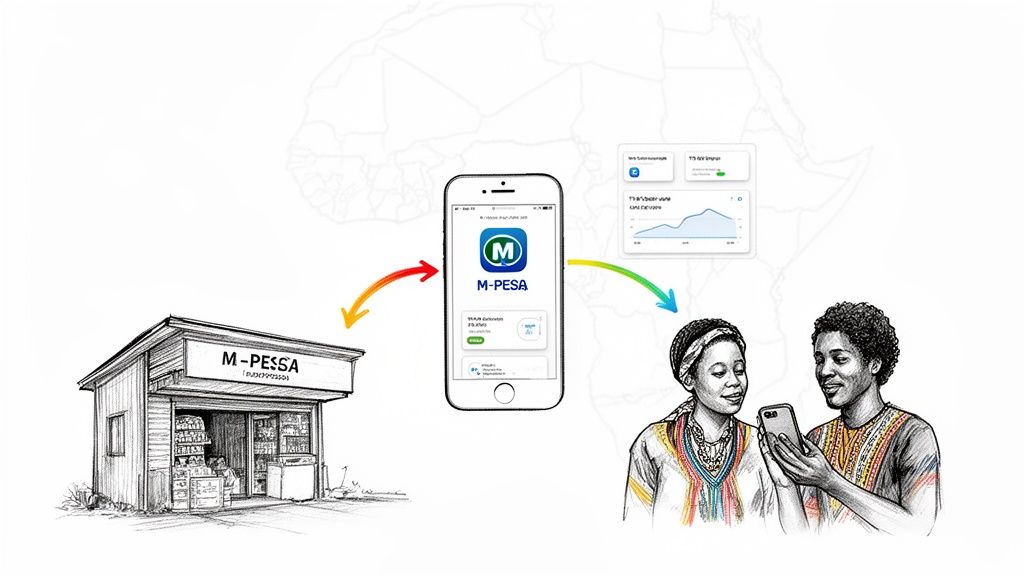
Centralising Your Business Operations
If you're like many growing businesses, your operations are probably a mix of spreadsheets, notebooks, and a dozen different messaging apps. It’s a recipe for missed opportunities and frustrating customer experiences. A CRM changes that by acting as a central command centre, bringing every client interaction, sales lead, and project detail into a single, easy-to-access system. To get a handle on why this is so important for Kenyan SMEs, it helps to first understand the customer relationship management basics.
The impact of having everything in one place is immediate and powerful:
- A single view of your customer: Anyone on your team can see the full history of interactions with a client. This means communication is always consistent and well-informed.
- Better task management: You can assign tasks, set deadlines, and track project progress without having to jump between different tools.
- Smarter, data-driven decisions: With all your information consolidated, you can run reports that show you what’s working, what isn't, and where you need to focus your efforts.
Addressing Local Market Challenges
Doing business in Kenya means operating in a unique financial world where mobile money is king. A generic, international CRM often completely misses this reality. The result? A clunky payment process for your customers and a headache for you when it's time to reconcile your accounts. A system designed for the Kenyan market from the ground up gives you a serious competitive edge.
The right CRM for a Kenyan SME has to do more than just manage contacts. It needs to solve local problems, like integrating M-PESA for one-click invoice payments and offering pricing that helps you grow, instead of holding you back.
This is why small businesses are embracing CRM software at such a rapid pace. In Kenya, SMEs are a huge economic force, contributing over 33.8% to the national GDP, according to the Kenya National Bureau of Statistics (KNBS). A customer-first approach is key to survival and growth. For businesses in hubs like Nairobi, CRMs with M-PESA integration are making a huge difference, with some firms reporting up to 40% improvements in sales productivity and customer retention.
Getting this foundational tool right is critical. If you want to dig deeper, you can check out our guide on what client relationship management is.
Evaluating Core CRM Features for the Kenyan Market
Choosing the right CRM for a small business in Kenya is about more than just storing customer contacts. It's about finding a platform that genuinely gets the unique operational hurdles we face here. Too often, generic, off-the-shelf software misses the mark because it completely ignores the fundamentals of how Kenyan businesses run—especially when it comes to getting paid.
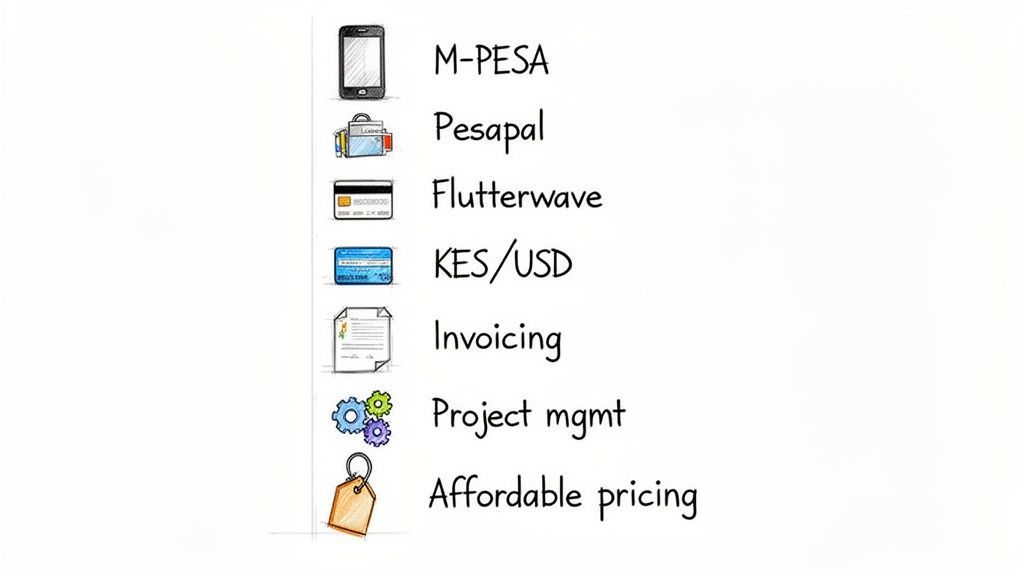
The right system isn't just a tool; it's a business partner. It comes equipped with features that are built for our commercial environment. That means you need to look past the flashy dashboards and zero in on the practical, non-negotiable capabilities that directly boost your cash flow and efficiency. A CRM's real value is measured by how neatly it fits into your existing workflows, not by how much you have to bend over backwards to adapt to it.
Seamless Local Payment Integrations
For any Kenyan SME, getting paid quickly and easily is everything. A CRM that can’t connect with the payment methods your customers actually use is, frankly, a non-starter in this market. This is probably the single most critical feature you need to look at.
Your checklist absolutely must include native support for:
- M-PESA: It’s the lifeblood of Kenyan commerce. Direct M-PESA integration isn't a nice-to-have; it's essential. It lets clients pay you straight from their phones, which means reconciliation happens automatically and you can stop chasing payments manually. For a deeper dive, check out our complete guide on finding a CRM with M-PESA integration.
- Pesapal: As a widely-used gateway, Pesapal brings mobile money and card payments under one roof, giving your diverse customer base the flexibility they need.
- Flutterwave: If you have ambitions beyond Kenya’s borders, this one is key. Flutterwave makes it simple to handle both pan-African and international transactions.
Without these, you're stuck with a disjointed process. It creates headaches for your team and friction for your customers. Proper integration means payment statuses update automatically inside the CRM, giving you a real-time, accurate picture of your financial health.
Affordable and Scalable Pricing
Many of the big international CRMs use a per-user, per-month pricing model. This might seem affordable when you're just starting out, but it can quickly become a massive financial drain as your team expands. For a growing SME, that model essentially punishes you for hiring, forcing you to pay more for every new salesperson, project manager, or support agent you bring on board.
Look for platforms with a flat-rate or tiered pricing model that isn’t tied to your user count. This gives you predictable costs and the freedom to grow your team without worrying about your software bill skyrocketing.
A solution like CRM Africa, for instance, is built on a no-per-seat licensing model. This makes it an incredibly cost-effective choice for teams that are scaling up, ensuring your CRM remains an asset, not an operational bottleneck.
All-In-One Business Functionality
A truly powerful CRM for a Kenyan service business should do a lot more than just manage leads. To avoid the expense and chaos of juggling a dozen different software subscriptions, find an all-in-one platform that brings your key operations together.
Look for essential built-in tools like:
- Invoicing and Quoting: The ability to create professional invoices and proposals directly from the CRM, all linked to the right client records and project data, is a game-changer.
- Project Management: For agencies, consultancies, and other service-based businesses, managing tasks, tracking milestones, and collaborating with your team without ever leaving the platform is vital.
- Client Portals: Offering clients their own secure, branded space to check on project progress, view invoices, and communicate with your team adds a layer of professionalism and transparency that customers love.
Comparing the Top CRM Platforms for Kenyan SMEs
Picking the right CRM is a huge decision for any Kenyan small business. You’ve got options from global giants to platforms built right here at home, so it’s critical to look past the flashy features and focus on what actually works for your day-to-day operations. The best CRM for a business in Kenya won’t just manage contacts; it will solve local problems, scale without breaking the bank, and pull all your essential work into one place.
Let's break down four of the top contenders: CRM Africa, HubSpot, Zoho CRM, and Pipedrive. We’ll measure them against the things that really matter to Kenyan SMEs—pricing models, handling local payments, and whether they come with built-in project management tools.
CRM Africa: Built for the Kenyan Market
CRM Africa was designed from the ground up with the realities of African businesses in mind, especially those in the service industry. Its biggest strength is its all-in-one design combined with a pricing model that tackles the scaling headaches every SME knows too well.
The platform rolls CRM, project management, and invoicing into a single, cohesive system. For businesses in Nairobi or Mombasa, this integration is massive. It means you stop paying for—and wrestling with—multiple, separate software subscriptions. An IT firm or a marketing agency can track a lead, draft a proposal, manage the entire project, and send the invoice, all without ever leaving the platform.
CRM Africa’s most powerful feature is its no-per-seat licensing model. This approach lets you add as many team members as you need without your bill going up. It makes your costs predictable and removes a huge barrier to growth that holds back so many small businesses.
This unique pricing is a genuine game-changer. When you hire more project managers or sales reps, your software costs stay flat, freeing up cash to reinvest where it counts.
HubSpot: The Global Leader with a Freemium Hook
HubSpot is a household name in the CRM world, famous for its slick marketing automation and easy-to-use interface. Its free CRM is a really attractive starting point for startups and tiny businesses just getting their customer data organised.
But for a growing Kenyan SME, the limits of the free and starter plans show up fast. While the basic contact management is free, you’ll need to upgrade to paid plans for essential tools like advanced automation and sales features, or even just to remove the HubSpot branding. Those costs are charged per user, per month, which can get expensive quickly as your team expands.
Zoho CRM: A Massive Suite of Business Tools
Zoho offers an entire ecosystem of business apps, with Zoho CRM sitting at the centre. Its main draw is the sheer variety of tools available, letting businesses manage everything from sales and marketing to finance and HR under one umbrella.
For Kenyan SMEs, Zoho's Bigin or Standard CRM plans offer a good feature set for a competitive price. The platform is incredibly customisable, a big advantage if you have very specific workflows. That flexibility, however, can mean a steeper learning curve. And just like HubSpot, Zoho’s pricing is typically user-based, so your costs will climb with every new team member you bring on board. While you can get some local payment integrations working, they often depend on third-party connectors, adding another layer of complexity.
If you're still exploring what different CRMs can do, our guide on examples of CRM software offers some great context.
Pipedrive: A Sales-Focused Powerhouse
Pipedrive does one thing, and it does it exceptionally well: it helps sales teams close deals. Its visual sales pipeline is one of the most intuitive and effective tools out there for managing leads and tracking progress. For any business where sales is the core function, Pipedrive is a fantastic choice.
The platform is built around activity-based selling, constantly prompting reps on the next step to push a deal forward. But its specialisation is also its biggest drawback for many Kenyan SMEs. It just doesn’t have the integrated project management and invoicing tools you find in platforms like CRM Africa. That means you’ll need to buy and integrate other software for those jobs, leading to higher costs and a disjointed workflow.
CRM Feature Comparison for Kenyan Small Businesses
To help you see the differences clearly, we've put together a table comparing the features that matter most to businesses operating in Kenya. This side-by-side view cuts through the marketing noise to show you how each platform really stacks up on the ground.
| Feature | CRM Africa | HubSpot (Free/Starter) | Zoho CRM (Bigin/Standard) | Pipedrive (Essential) |
|---|---|---|---|---|
| Pricing Model | No per-seat license | Per-user/month (paid tiers) | Per-user/month | Per-user/month |
| M-PESA Integration | Native one-click payments | Requires third-party integration | Requires third-party integration | Limited/complex integration |
| Project Management | Fully integrated tools | Not available in free/starter | Available in higher tiers/Zoho Projects | Requires add-on/integration |
| Invoicing & Payments | Built-in with payment gateways | Limited; requires paid add-ons | Basic; full features in Zoho Invoice | Requires integration |
| Client Portal | Branded, secure client access | Not available | Available in higher tiers | Limited functionality |
| Ideal For | Service-based SMEs, agencies | Startups, marketing-heavy teams | Businesses needing high customisation | Sales-driven organisations |
This table highlights a key reality: while global platforms offer powerful tools, they often miss the specific needs of the Kenyan market, like seamless M-PESA integration or pricing that supports team growth without financial penalties.
The move toward CRM adoption across the continent is undeniable. According to projections by Statista, the CRM software market in Africa and the Middle East is expected to reach a revenue of US$2.34 billion in 2024. This trend reflects what’s happening in Kenya, where SMEs—making up 98% of all businesses—are using these tools to drive real revenue growth. As you compare platforms, it’s vital to look for solutions with strong, integrated capabilities, like those covered in this review of the 12 Best CRM With Email Marketing Platforms.
Real-World Scenarios: How Kenyan Businesses Win with a CRM
It’s one thing to read a list of CRM features, but it's another thing entirely to see how they solve real problems for businesses right here in Kenya. A smart, locally-aware CRM becomes the central hub for everything—connecting sales, project delivery, and payments into one smooth process. For many SMEs, this is the turning point between just getting by and truly starting to scale.
Let's look at a few practical situations where a platform like CRM Africa provides tangible solutions. These aren't just hypotheticals; they show how an all-in-one system helps Kenyan entrepreneurs break through common operational roadblocks, work smarter, and get their cash flow in order.
This infographic breaks down the top CRM contenders for the Kenyan market, zeroing in on what matters most: payment integrations, project management, and invoicing.
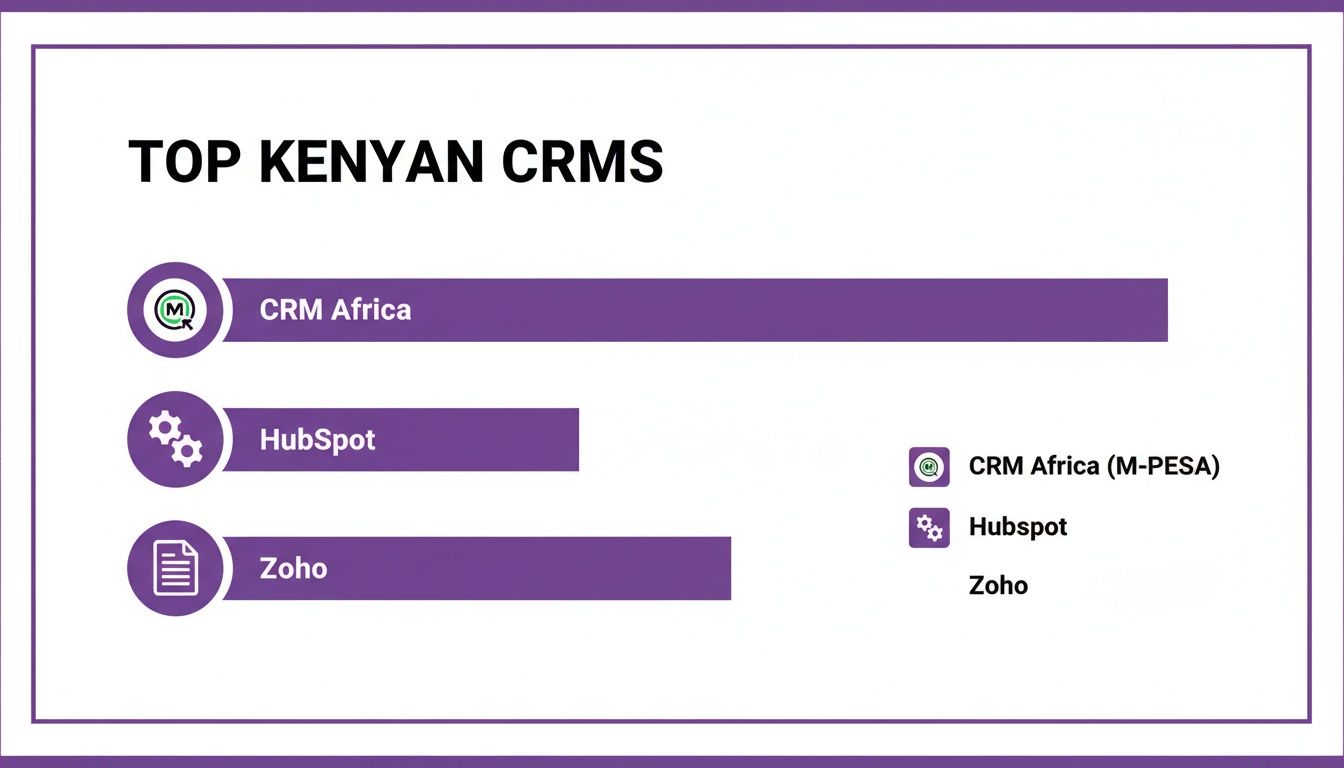
As you can see, a platform with built-in M-PESA support and integrated project tools offers a far more connected solution for local service businesses.
The Nairobi Digital Marketing Agency
A growing digital marketing agency in Nairobi was drowning in disjointed tools. They used one app for proposals, another for managing tasks, and a completely separate system for invoicing. It was pure chaos. Client info was all over the place, and figuring out if a project was even profitable was a guessing game. Worst of all, chasing payments was a manual nightmare of follow-up emails and cross-checking M-PESA statements.
Implementing an all-in-one CRM changed everything:
- Unified Project and Client Data: Suddenly, all client emails, project milestones, and financial records lived in one place. This gave everyone on the team a 360-degree view of each client relationship.
- Automated Invoicing with M-PESA: The agency could now fire off an invoice the moment a project milestone was hit. The integrated M-PESA link meant clients could pay with a click, and the system automatically marked the invoice as paid. No more manual reconciliation. Research from Microsoft highlights how automating these tasks frees up huge amounts of time for more valuable work.
- Drastically Improved Cash Flow: This streamlined payment process cut down the time it took to get paid. The impact on their monthly cash flow was immediate and huge, giving them the stability to chase bigger clients.
The IT Consulting Firm
An IT consulting firm was struggling with client communication and project transparency. Clients often felt left in the dark, which led to scope creep and constant "just checking in" emails that ate up the team's time. They needed to give clients a clear window into project progress without creating more admin work.
A CRM with a built-in client portal was the perfect answer. The firm could give each client a secure, branded login where they could:
- Track Milestones: Clients could see project timelines, check the status of deliverables, and access shared files whenever they wanted, 24/7.
- Centralise Communication: All project-related messages were kept inside the portal. This created a single, undeniable record and put an end to lost emails.
- View and Pay Invoices: Financial transparency got a major boost, as clients could view their billing history and settle outstanding invoices directly through the portal.
This single change didn't just boost client satisfaction; it positioned the firm as a highly professional and organised partner. As Salesforce often points out, strengthening customer relationships is exactly what a modern CRM is built for.
The E-commerce Startup
An e-commerce startup was managing sales across its website, social media, and WhatsApp, and was quickly getting overwhelmed. Leads were slipping through the cracks, customer questions were going unanswered, and they had no real view of their sales pipeline. They desperately needed a system to automatically capture, track, and nurture every single potential customer.
With a CRM that had sales automation, the startup was able to:
- Automate Lead Capture: Every inquiry from their website or social media was instantly added to the CRM as a new lead.
- Build a Visual Sales Pipeline: They set up a visual pipeline to move leads from the first point of contact all the way to a sale, making sure no opportunity was ever forgotten.
- Standardise Communication: Using email templates and automated follow-ups, they could engage with leads consistently, gently guiding them toward a purchase without any manual effort.
This automation allowed their small team to handle a much higher volume of customer interactions without breaking a sweat. By putting a structure to their sales process, they saw a significant jump in their conversion rates and built a solid foundation for real growth.
A Practical Guide to CRM Implementation and Migration
Choosing the right CRM for your small business in Kenya is a massive step forward, but let's be honest—the real work starts the moment you decide to implement it. A smooth transition is everything. It's the difference between your team actually using the new system and you getting the return on investment you were banking on.
Taking on a new platform can feel like a huge task, but if you break it down into clear, manageable steps, you can avoid most of the disruption and set your business up for a win. The whole thing hinges on solid planning before you even think about importing a single contact. A successful migration isn't just a tech job; it’s a business project that needs clear goals, clean data, and your team's buy-in from day one.
Preparing Your Data for a Smooth Transition
Your CRM will only ever be as good as the data you feed it. So, before you move a single thing from your spreadsheets or old system, you absolutely must dedicate time to cleaning up your existing information. This is probably the single most important step to prevent major headaches down the road.
Start by pulling all your customer data together from every corner it lives in—spreadsheets, email contacts, forgotten databases, you name it. Once it's all in one place, your focus shifts to quality control.
- Remove Duplicates: Hunt down and merge any repeated entries. You want one single, accurate record for each customer.
- Standardise Formatting: Make sure details like names, phone numbers, and addresses all follow the same consistent format.
- Fill in the Gaps: Identify and complete any missing information that's critical for your sales team or project managers.
A phased rollout is often the smartest way to go. Instead of moving everyone and everything at once, start with a small, tech-savvy team. This gives you a chance to test the system, get real feedback, and fix any glitches before the company-wide launch.
Configuring Your New CRM for Kenyan Operations
Once your data is clean and ready, the next phase is all about shaping the CRM to fit your actual business workflows. This is where you customise the platform to match how your team really sells products or delivers services. Two of the biggest pieces of this puzzle are setting up your sales pipelines and integrating local payment gateways.
For instance, you'll want to map out the exact stages a lead goes through, from that first "hello" to a closed deal. At the same time, connecting gateways like M-PESA isn't just a nice-to-have; it's essential for automatically reconciling payments.
Kenyan small businesses often wrestle with fragmented payments, but the right CRM can sort this out. CRM Africa, for example, integrates pan-African payment rails like M-PESA, Paystack, and Pesapal, which has been shown to result in 45% faster cash collection. The data doesn't lie: Kenyan SMEs are seeing up to 40% boosts in sales from these kinds of CRM insights—a crucial advantage as e-commerce keeps growing. You can dive deeper into how CRM tools are empowering Kenyan businesses on LipaBiz.com.
Finally, don’t skimp on training. Your team needs to understand not just how to use the software, but why it helps them. Focus on hands-on sessions and make sure to highlight how the CRM automates tedious tasks and makes their jobs easier. Opting for a platform that offers a free demo and solid local support is a much lower-risk choice, especially if you don't have a dedicated IT department on standby.
So, What's the Final Verdict?
We've walked through the essentials that make or break a CRM for a Kenyan small business, from local payment hooks to pricing that doesn't punish you for growing. The right choice always comes down to one thing: which platform actually solves the real-world operational headaches you face every day. And while the big international names like HubSpot and Zoho have plenty of horsepower, their models often create more problems than they solve in our market.
After looking at everything, CRM Africa is the clear standout, especially for Kenyan startups, agencies, and service businesses. Its real strength comes from a genuine understanding of our local business culture, tackling the exact pain points that keep so many SMEs from getting ahead.
Why CRM Africa Makes the Most Sense
The things that set this platform apart are the very things a growing Kenyan business needs most. Unlike competitors who slap you with per-user fees the moment you hire someone, CRM Africa’s approach lets your team grow without your software bill exploding. That’s a massive win when you're trying to scale.
Plus, its all-in-one design means you get a single, unified system that others can only offer through a patchwork of expensive add-ons.
- No Per-User Licensing Fees: This is huge. It gives you predictable costs, removing a major financial hurdle as you bring more people on board.
- Native M-PESA Integration: We're talking seamless, one-click invoice payments. This kills the soul-crushing manual reconciliation that eats up so much time and simplifies your cash collection.
- Integrated Business Tools: Having your CRM, project management, and invoicing under one roof just means less chaos and lower software costs overall.
For a Kenyan SME, where tight cash flow and lean operations are everything, a platform built to simplify payments and support team growth without extra costs isn't just a tool—it's a core strategic asset.
These aren't just features; they're practical solutions. As even global players like Salesforce point out, a good CRM is about building customer relationships. But for a business in Kenya, it absolutely must strengthen your financial footing at the same time.
Of course, the only way to know for sure if a CRM is right for you is to get your hands on it. You need to see for yourself how it maps to your workflows and solves your specific challenges.
Ready to see how a single platform can pull your operations together and get you paid faster? Schedule a free, personalised demo of CRM Africa today and let's talk about a setup that fits your business perfectly.
Common CRM Questions from Kenyan Businesses
Choosing a CRM can feel overwhelming, especially when you're trying to find one that actually works for the Kenyan market. We get a lot of questions from local business owners, so we've put together answers to the most common ones to help you feel confident in your choice.
Can I connect my M-PESA Till number to a CRM?
Yes, but you need to be careful here. Many of the big international CRMs don't offer a direct M-PESA integration, which means you're stuck with clunky, third-party workarounds. A platform built for the local market, like CRM Africa, is designed to connect straight to your existing M-PESA Till or Paybill. This makes one-click invoice payments and automatic reconciliation a reality—a huge deal for managing your cash flow properly.
What's a realistic CRM budget for a small Kenyan team?
For a small business in Kenya, your budget should be all about value and room to grow. It's easy to get caught out by the per-user pricing models from global providers, which can quickly climb past KSh 3,000 per user, per month. A flat-rate or tiered plan that doesn't charge you more for every new team member is a much more sustainable way to go.
The biggest mistake you can make is picking a CRM based on a famous brand name without checking if it handles local payments. A system that can’t process M-PESA smoothly will cause more problems than it solves, messing up your cash flow and frustrating your customers.
How long does it actually take to set up a CRM?
It can be anywhere from a few hours to a few weeks. A straightforward, all-in-one platform with a good onboarding process can be up and running in an afternoon. On the other hand, more complex systems, especially if you're pulling in data from spreadsheets and other apps, will naturally take longer to get right.
What's the number one mistake to avoid when choosing a CRM?
Forgetting about local integrations. It happens all the time. A business signs up for a well-known global CRM, only to find out later it doesn't connect easily with essential tools like M-PESA. This just creates more manual work and a broken payment process. Before you commit, always double-check that the CRM can handle local payment methods without any fuss.
Ready to see how an all-in-one platform can bring your operations together, simplify payments, and help your business grow? CRM Africa offers a free-forever plan perfect for small teams.