
Subscriber data management (or SDM) is simply the system you use to keep all the information about your subscribers organised in one central place. Think of it as your business’s master key and a perfectly run concierge desk, all rolled into one. It makes sure every single piece of customer information is accurate, easy to find, and secure. This isn’t just about tidy record-keeping; it’s the foundational process that turns raw data into a powerful asset for growth.
1. What Is Subscriber Data Management Anyway?

Imagine trying to run a hotel where every guest’s key card, room preference, and billing info is scattered across different notebooks and sticky notes. Chaos, right? Subscriber data management is the digital solution that prevents that kind of operational nightmare, allowing you to provide smooth, efficient service.
This is far more than a simple contact list. It’s a living, breathing system that brings together everything you could possibly need to know about your subscribers. For Small and Medium-sized Enterprises (SMEs) across Africa’s booming subscription economy, getting SDM right isn’t just a technical task—it’s the very bedrock of a healthy, sustainable business.
Why It Matters for African SMEs
A solid approach to managing subscriber information has a direct impact on your bottom line. It creates the essential framework that so many other core business functions rely on to work properly. Without it, companies are left wrestling with inaccurate billing, frustrating customer experiences, and decisions based on flawed data (Loshin, 2011).
The key benefits really hit home:
- Accurate Billing and Payments: It guarantees that subscription renewals, invoices, and mobile money payments are all processed correctly. This stops revenue leakage and keeps customers happy.
- Personalised Customer Experiences: It gives you a deep understanding of your subscribers’ preferences and behaviours, which is crucial for building loyalty and keeping churn rates low.
- Informed Business Decisions: Centralised data offers crystal-clear insights for your analytics, helping you spot trends and uncover opportunities for real growth.
The global importance of this is undeniable. The subscriber data management market was valued at around USD 7.21 billion and is expected to rocket to USD 23.4 billion by 2032 (Precedence Research, 2023). This trend shows just how critical these systems are becoming for businesses everywhere.
“A business analyst creates a wonderful report or dashboard, and users don’t have access to the underlying data. What are the processes a user must follow to gain access? How complex and perhaps frustrating is this process likely to be?” (Soares, 2017)
This insight perfectly highlights a common headache that SDM solves: making sure the right people have secure, straightforward access to the data they need, exactly when they need it. The whole point is to make data usable, not just to store it away.
The Core of Modern Data Operations
At its heart, effective subscriber data management is all about creating a single, reliable source of truth. Modern approaches lean on concepts like Change Data Capture (CDC), which cleverly tracks data modifications in real-time. This ensures your central database is always perfectly up-to-date.
By organising this information properly, you can finally unlock its true potential. If you’re wondering where to even begin, a great starting point is realising that the key to business growth was hiding in your customer data. For any African SME, turning this raw data into your most valuable business asset is the first major step toward building a scalable and successful subscription model.
2. Building a Complete Subscriber Profile
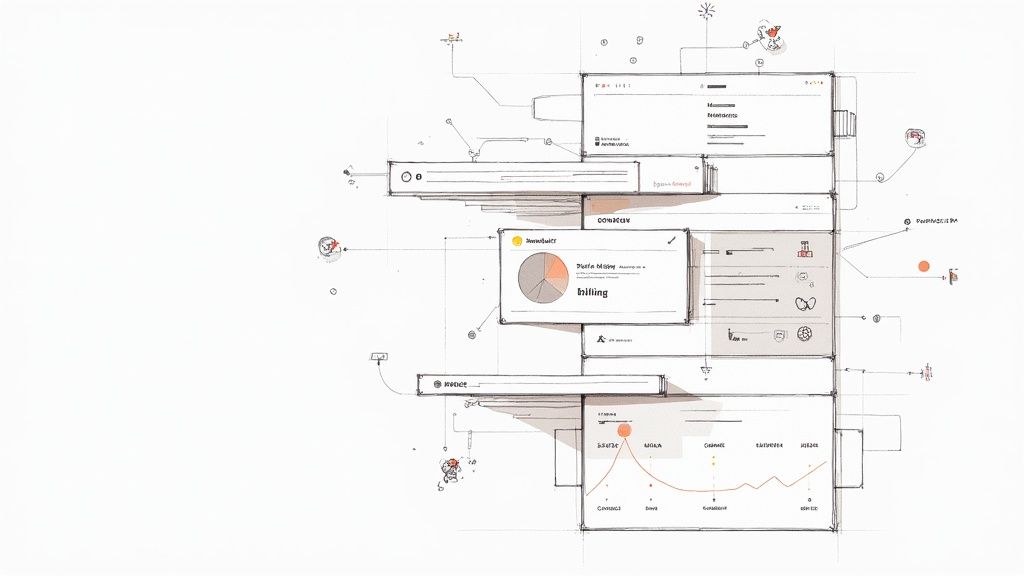
A powerful subscriber profile is so much more than a name and an email address. If you genuinely want to understand your customers and scale your business, you need to piece together a complete picture from different data points. Think of each bit of data as a clue, revealing another part of your customer’s story and their journey with your brand.
This goes way beyond basic contact details. A truly holistic profile captures everything from subscription preferences and payment habits to their interactions with your support team (Dyche, 2001). It’s when you connect these individual fields that you create a comprehensive view—one that’s essential for making smart business decisions.
For any SME serious about scaling, moving from a simple spreadsheet to a structured database isn’t just a good idea; it’s a necessity. Spreadsheets become messy fast, leading to data errors, security risks, and operational headaches that a proper subscriber data management system is designed to solve.
The Anatomy of a Subscriber Profile
To build this complete picture, you need to collect the right kinds of information. Each category has a specific job, helping you refine your services, improve your communication, and secure your revenue. For African SMEs, focusing on locally relevant data like mobile money usage is particularly important.
Here are the essential building blocks:
- Identity and Contact Data: This is your foundation. It includes the subscriber’s full name, email address, phone number, and physical location—all critical for regional segmentation and compliance.
- Subscription and Billing Information: This covers the commercial side of the relationship. You need to track the specific plan (e.g., Basic, Premium), the billing cycle (monthly or annual), renewal dates, and any discounts or trials in play.
- Payment and Transaction History: This is vital for your cash flow. You should record their preferred payment method, whether it’s mobile money (like M-Pesa or MTN Mobile Money), a credit card, or a bank transfer. A full history of all payments, both successful and failed, helps you spot payment issues before they become a real problem.
- Usage and Engagement Metrics: This tells you how customers are interacting with your service. Track things like their last login date, how often they use the service, and which features they use most. A drop in engagement can be an early warning sign of a customer about to churn.
Collecting these details systematically helps you move from guessing what your customers want to knowing what they need.
The sheer scale of data generation today is staggering, with over 2.5 quintillion bytes of data created every single day worldwide. A huge chunk of this relates to subscriber interactions, but managing it is tough—nearly 80% of companies admit that a large portion of their data is unstructured. You can read more about these big data statistics on G2.com.
This complexity really drives home the need for a structured approach. It’s about turning raw, messy information into an organised, actionable asset for your business.
To get started, it’s helpful to map out exactly what you need to collect. Here’s a table outlining the most critical data fields for an African SME.
Essential Subscriber Data Fields for African SMEs
| Data Category | Key Data Fields | Business Application |
|---|---|---|
| Personal & Contact | Full Name, Email, Phone Number, Physical Address/Region | Core communication, regional marketing, and legal compliance. |
| Subscription Details | Plan Tier (e.g., Gold), Start Date, Renewal Date, Status (Active, Paused) | Manages the customer lifecycle, automates billing, and forecasts revenue. |
| Billing & Payment | Preferred Method (Mobile Money, Card), Billing Cycle, Transaction History | Ensures seamless payment collection, reduces failed payments, and simplifies reconciliation. |
| Service Engagement | Last Login, Feature Usage Frequency, Session Duration | Identifies at-risk customers, highlights popular features, and informs product development. |
| Customer Support | Ticket History, Support Queries, Feedback/NPS Scores | Improves customer service, resolves issues faster, and measures satisfaction. |
Thinking through these categories ensures you’re not just collecting data for the sake of it, but gathering information that directly fuels better business decisions.
From Data Points to a Holistic View
This is where the magic really happens—connecting the dots between these individual data fields. A well-organised subscriber profile doesn’t just store information; it creates relationships between different data points to give you much deeper insights.
For instance, what if you link a subscriber’s support ticket history to their usage metrics? You might discover that users who report a specific technical issue are also the ones who use a certain feature the least. That’s a powerful insight. It allows you to either improve the feature or provide targeted support, directly boosting customer satisfaction and retention (Mithas, Krishnan & Fornell, 2005).
Similarly, combining payment history with communication preferences helps you personalise billing reminders. A customer who prefers SMS alerts and pays via mobile money should get a different notification from someone who uses email and a credit card. This level of detail transforms a routine message into a positive customer experience, building trust and reinforcing the value of your service. It is this interconnectedness that turns a simple database into a strategic tool for growth.
3. Navigating Data Privacy and Compliance in Africa
Handling your subscribers’ information isn’t just an operational task—it comes with some serious legal and ethical weight. For any African SME, a smart subscriber data management strategy is only half the picture. The other half? A rock-solid commitment to data privacy. Getting this right is about more than just dodging fines; it’s about building real, lasting trust with your customers.
We’ve seen a massive shift across the continent towards stronger data protection, with many countries putting clear legal frameworks in place (UNCTAD, 2023). This means businesses can no longer afford to treat data privacy as an afterthought. It has to be baked into your processes from day one.
Understanding Key African Data Regulations
While the fine print can vary from country to country, the core ideas behind Africa’s data protection laws are starting to look very similar. They all tend to circle around transparency, a user’s rights over their own data, and holding businesses accountable. As an SME, getting to know the rules in your main markets is non-negotiable.
Here are a few of the big ones you should know about:
- Nigeria’s NDPA (Nigeria Data Protection Act): This act lays down a clear legal framework for protecting personal data. It puts a heavy emphasis on processing data lawfully and respecting the rights of the people whose data you’re holding.
- South Africa’s POPIA (Protection of Personal Information Act): POPIA is one of the most comprehensive data privacy laws in Africa. It sets the rules for when and how organisations can collect, use, store, and eventually delete personal information.
- Kenya’s Data Protection Act (DPA): Much like its neighbours, Kenya’s DPA governs how personal data is processed, spells out the rights of individuals, and requires businesses to have security measures in place to protect that data.
These rules create new, critical responsibilities for businesses. In fact, the rise of these legal frameworks has become a major factor in the growth of the SDM market. The demands of compliance can bump up operational budgets by as much as 25%, as companies invest in handling sensitive subscriber data correctly without letting service quality slip. You can discover more insights about these market drivers on Mordor Intelligence.
Core Privacy Principles You Must Uphold
Trying to wade through all the legal jargon can feel like a headache, but these regulations are all built on a few simple, fundamental ideas. If you focus on getting these core principles right, you can build a privacy-first culture that not only ticks the legal boxes but also makes your customers feel safe.
A privacy-first approach means treating a customer’s data with the same care and respect you’d expect for your own. It’s about shifting from asking “what can we do with this data?” to “what should we do with this data to provide value while protecting our user?” (Cavoukian, 2009)
This change in mindset is everything. Here are the principles that really matter in the day-to-day.
Transparent Consent Management
You have to get clear, explicit consent from subscribers before you collect or use their data. This means no more pre-ticked boxes or burying consent in the fine print of a 20-page legal document.
- Be Specific: Tell people exactly what data you’re collecting and precisely how you plan to use it. No vague language.
- Make It Easy to Withdraw: Your subscribers need a simple, obvious way to change their minds and take back their consent at any time.
Data Residency and Cross-Border Transfers
Where you store your subscriber data is a bigger deal than ever. Many African regulations now include data residency requirements, which means that personal data on citizens has to be stored on servers physically located inside the country. Before you sign up for a cloud provider or a CRM, you absolutely must check if they can host data locally in your key markets.
Respecting Subscriber Rights
Your subscribers have rights over their information. It belongs to them, not you. A good subscriber data management system makes it easy for you to honour these rights, which usually include:
- The Right to Access: Users can ask for a copy of all the personal data you have on them.
- The Right to Rectification: If their data is wrong or incomplete, they have the right to get it fixed.
- The Right to Erasure: Often called the “right to be forgotten,” this lets users request that you delete their personal data in certain situations.
When you build processes that respect these rights, you’re doing more than just following the law. You’re showing your customers that you genuinely value their privacy, turning what could be a compliance hurdle into a powerful way to stand out from the competition.
4. Practical Ways to Manage Your Subscriber Data

Managing your subscriber data well isn’t about buying the most expensive software; it’s about building the right habits. A powerful database is a healthy database, and that requires consistent, practical action. Getting hands-on with your data directly improves everything from customer retention to how smoothly your business runs day-to-day.
We can break these essential practices down into four key pillars. By focusing on these areas, any African SME can transform its subscriber list from a static collection of contacts into a dynamic engine for growth.
Adopt Smart Data Collection
The journey begins with how you gather information. Your goal is to collect valuable data without overwhelming or scaring off new subscribers. The best approach? Start small.
Ask for the absolute essentials during the initial sign-up: a name, an email or phone number, and their consent to hear from you. You can always gather more details later as the relationship develops. This method, known as progressive profiling, allows you to build a richer customer profile over time without causing friction at the start.
For instance, after a customer makes their first mobile money payment, you could then ask for their preferred billing cycle. It feels natural and relevant, a world away from a long, intimidating form asking for everything at once.
Implement Strategic Segmentation
Once you have the data, its real power is unlocked through segmentation. This is just a fancy way of saying you group subscribers based on shared characteristics so you can send them messages that actually hit the mark. One-size-fits-all communication just doesn’t cut it anymore.
Think of it like your favourite market vendor who remembers exactly what you like. They don’t shout the same offer to everyone passing by; they tailor their recommendations based on what they know about each person. That personal touch makes all the difference.
Here are a few powerful ways you can segment your subscribers:
- By Subscription Tier: Send exclusive updates or special offers to your premium subscribers to remind them of the value they’re getting.
- By Payment Method: Group customers who use M-Pesa or Flutterwave to send targeted notifications about their payments or new features on those platforms.
- By Engagement Level: Identify subscribers who haven’t logged in for 30 days and send them a friendly re-engagement email with a helpful tip or a small discount.
This targeted approach makes your customers feel seen and understood, which is the very foundation of long-term loyalty (Peppers & Rogers, 2016).
“A data management platform is usable when it empowers understandability, broad usage patterns, and necessary capabilities, and is both simple to use and trustworthy.” (Abraham, Schneider & vom Brocke, 2019)
This really gets to the heart of it. Your data has to be organised in a way that’s easy to understand and act on, turning raw information into business intelligence you can trust.
Perform Routine Data Cleansing
Let’s be honest, subscriber data gets messy over time. People change their email addresses, make typos when signing up, or accidentally create duplicate accounts. Routine data cleansing is the crucial housekeeping that keeps your database accurate and reliable.
A messy database creates real business headaches: bounced marketing emails, failed payment notifications, and analytics that don’t tell the true story. Regularly checking for and fixing these errors isn’t just a nice-to-have; it’s non-negotiable. This means merging duplicates, correcting spelling mistakes, and updating outdated contact information.
Ensure Seamless Data Synchronisation
Finally, your subscriber data must be consistent across all the different tools you use. Data synchronisation is the magic that ensures when information is updated in one place (like your CRM), it automatically updates everywhere else—from your payment gateway to your customer support desk.
Imagine a customer updates their phone number in their client portal. If that change doesn’t sync with your billing system, their next mobile money payment reminder could go to the wrong number. This could lead to a missed payment and a customer you didn’t have to lose. Mapping out these connections is critical, and you can get a better handle on it by creating a https://crm.africa/blog/data-flow-diagram-2/.
Good data management also means following clear and effective data retention policies to minimise risk and keep storage costs down. By mastering these four practices—collection, segmentation, cleansing, and synchronisation—you build a rock-solid foundation for every customer interaction.
5. How to Bring Your Business Tools Together with SDM
Your subscriber data is only truly powerful when it flows freely between the tools you rely on every day. When it’s locked away in one system, you create frustrating data silos. This forces your team into a nightmare of manual copy-pasting, which is not only slow but also a recipe for costly mistakes. Real subscriber data management is about building a connected ecosystem where information moves automatically, keeping every part of your business perfectly in sync.
This approach stops your tech stack from being a clumsy collection of separate apps and turns it into a single, unified machine. When your central subscriber database can “talk” to your other platforms, you slash repetitive manual work, dramatically cut down the risk of human error, and unlock a much richer understanding of your customer’s journey.
The whole point is to create a seamless flow of information that automates workflows and gives your team the accurate, real-time data they need to make smart decisions.
Connecting SDM with Your CRM
The single most critical connection you can make is between your subscriber database and your Customer Relationship Management (CRM) platform. It helps to think of your SDM as the engine room, storing all the raw data, while the CRM is the dashboard your sales, marketing, and support teams use to steer the ship.
Once they’re connected, any change to a subscriber’s profile—maybe they upgrade their plan or update their phone number—instantly shows up in the CRM. This means your customer-facing teams always have the freshest information right at their fingertips, no questions asked.
This connection pays off in several big ways:
- A True 360-Degree Customer View: Your sales team can see a lead’s entire story, from the day they signed up to their current usage habits, all without leaving the CRM.
- Personalised Communication That Actually Works: Marketing can tap into detailed subscription data to craft targeted email or SMS campaigns that genuinely resonate with customers.
- Faster Support Resolutions: Support agents get immediate access to a customer’s complete billing and service history, letting them solve problems on the spot without making the customer wait.
Integrating with Subscription and Billing Platforms
For any subscription-based SME in Africa, linking your SDM with billing and payment software isn’t just a good idea—it’s non-negotiable. This is how you automate the entire revenue cycle, from sending invoices to reconciling payments. The integration guarantees that the right billing information is used for every single customer, every single time.
For instance, when a subscriber upgrades their plan, the integration should automatically tell the billing system to adjust their next invoice. This direct link stops revenue leakage from incorrect charges and helps prevent involuntary churn that happens when payments fail because of out-of-date card details.
“Having seamless access to data across different storage spots can really boost our ability to analyze data and make smart decisions. Yet, the complexity of such a setup can’t be ignored.” (Redman, 2013)
This quote perfectly captures both the challenge and the opportunity. Getting these systems to talk to each other cuts through the complexity, ensuring your critical financial data is consistent and reliable across your entire operation.
Enabling Mobile Money and Payment Gateways
In many markets across Africa, mobile money isn’t just another payment option—it’s often the main way customers pay. Integrating your subscriber management system directly with gateways like M-Pesa, MTN Mobile Money, Flutterwave, or Paystack is absolutely essential for smooth operations.
This connection automates one of the most tedious jobs for any SME: payment reconciliation. When a subscriber pays an invoice with mobile money, the gateway can instantly update your SDM. The system then automatically marks the invoice as paid and logs the transaction in the customer’s history. No more manually cross-referencing bank statements or SMS notifications. For a truly slick setup, you can learn more about combining a CRM with a client portal in Africa to give customers one simple place to manage their details and payments.
As you look at different tools, keep an eye out for ones that have pre-built APIs or existing partnerships with the payment gateways you use. This makes the technical side of things far simpler, helping you build a reliable, automated system that gets you paid faster.
6. Your Action-focused Roadmap to Implementing SDM
Alright, let’s move from theory to action. Getting a proper subscriber data management system in place doesn’t need to be a massive headache. If you break the process down into manageable chunks, any SME can graduate from scattered spreadsheets to a clean, centralised hub. This roadmap is designed to be practical—to get you from learning to doing.
The first step is always taking a good, hard look at where you stand right now. Before you can pick the right software or start moving data around, you have to understand your current data landscape. What are you collecting? Where does it all live? And how are you actually using it?
Phase 1: Audit and Strategy
This first phase is all about discovery and planning. The goal here is to map out exactly what you need before you commit to a single tool. I’ve seen it time and again: rushing this stage almost always leads to picking the wrong software or building processes that just don’t work.
- Audit Your Current Data: Pinpoint every single place you store subscriber information. We’re talking spreadsheets, email lists, your accounting software, maybe even physical notebooks. Document the type of data you collect in each place and start flagging any gaps or inconsistencies you find.
- Define Your Goals: What pain point are you trying to solve with SDM? Is it to finally get a handle on failed payments? To send more personalised marketing that actually converts? Or maybe to give your support team the info they need to help customers faster? Your goals will be your North Star when choosing your tools.
- Select the Right Tools: With clear goals in hand, you can start evaluating your options. Look for platforms like CRM Africa that bring billing, mobile money support, and a CRM together under one roof. Make sure whatever you choose can handle the specific data fields and compliance requirements you’ve already identified.
Phase 2: Implementation and Migration
Once your strategy is locked in, it’s time to roll up your sleeves and get technical. This phase is all about setting up your new system and carefully moving your existing data into its new home.
The diagram below gives you a clear picture of how data should flow in a well-integrated system.
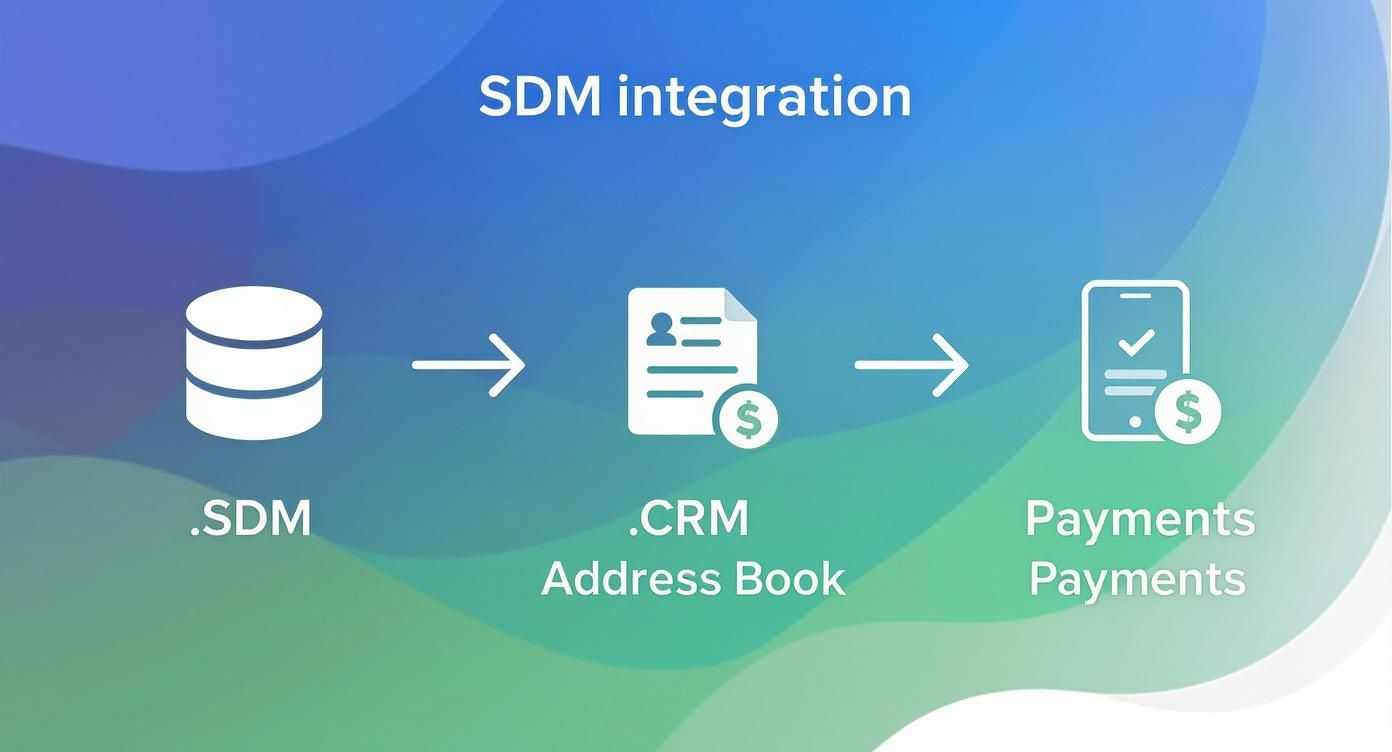
Think of it this way: your central SDM database is the heart, pumping clean data to your CRM for customer conversations and to your payment gateways for seamless billing.
“I can find what I need… I can access what I need… I can do what I need to do.” (Nielsen Norman Group, 2020)
These simple statements from a user perfectly capture the end goal. A successful implementation means your team can find, access, and use subscriber information easily and securely, without jumping through hoops.
Phase 3: Training and Optimisation
At the end of the day, a tool is only as good as the team using it. This final phase is all about your people and making sure the system evolves with your business.
- Train Your Team: Don’t just hand over the keys. Make sure everyone understands how to use the new system and, just as importantly, why the new data protocols are in place.
- Monitor and Refine: Launch day is just the beginning. You need to regularly review your processes, get honest feedback from your team, and always be on the lookout for ways to make your workflows even better.
Following this simple roadmap will help you confidently put a subscriber data management system in place—one that boosts efficiency, builds lasting customer trust, and paves the way for sustainable growth.
7. Still Have Questions? We’ve Got Answers
Diving into subscriber data management can feel like a big step, especially if you’re moving on from simpler, manual methods. It’s only natural to have a few questions. Let’s tackle some of the most common ones we hear from SMEs just like you.
Can’t I Just Use a Spreadsheet When I’m Starting Out?
Look, almost everyone starts with a spreadsheet. It’s a familiar first step. But honestly, it becomes a major bottleneck faster than you’d think. Spreadsheets just don’t have the muscle for automation, real security, or the integrations you need to actually grow.
Once you have a steady stream of subscribers, things get messy. You’ll be wrestling with duplicate data, struggling to segment your audience for targeted offers, and facing serious compliance risks under laws like POPIA. Our advice? Make the switch to a proper CRM or SDM tool as soon as possible. It helps you build scalable, secure processes from day one, not after the problems start piling up.
How Exactly Does This Help Reduce Customer Churn?
This is where things get interesting. Good subscriber data management is your secret weapon against churn because it gives you a clear window into how your customers are behaving. By keeping an eye on things like service usage, payment history, and support tickets, you can spot customers who might be about to leave—long before they actually do.
“A data management platform is usable when it empowers understandability, broad usage patterns, and necessary capabilities, and is both simple to use and trustworthy.” You can explore more about user-centric data management.
Think about it: you could create a segment of users with low activity and hit them with a re-engagement campaign designed just for them. Even better, solid billing data helps stop involuntary churn from failed payments. A smart system can automatically send reminders about expired cards or prompt users to fix their mobile money details. That’s revenue you would have otherwise just lost.
What’s the Biggest Data Compliance Mistake African SMEs Make?
This one is huge, so listen up. The most common—and most expensive—mistake we see is failing to get clear, informed consent before collecting any data. That tiny, vaguely-worded checkbox buried deep in your terms and conditions? It’s not going to cut it anymore.
Data protection laws across the continent, like Nigeria’s NDPA and Kenya’s DPA, are pretty strict. They demand clear, affirmative consent for specific things, like sending marketing emails. If you’re not upfront about what data you’re collecting and why you need it, you risk not just heavy fines, but something far worse: losing your customers’ trust for good. Always prioritise transparent consent management on every single form and touchpoint. It’s how you build a brand people actually trust.
Ready to get all your subscriber data in one place and make your business run smoother? CRM Africa is an all-in-one platform built for African SMEs, with integrated billing, project management, and mobile money support. Get started for free and see for yourself how a unified system helps you get paid faster and grow your business. Schedule a free consultation or Demo today.