A profitable business can still fail due to poor cash management. This reality highlights the critical importance of the cash flow statement, a financial report that provides a detailed picture of how a company’s cash position has changed over a specific period. Unlike the income statement, which can include non-cash items like depreciation, the cash flow statement focuses purely on the cash moving in and out of your business (Farris, Cespedes, & St. John, 2011). It is the ultimate measure of a company’s ability to generate cash to pay its debts, fund its operations, and make investments.
This article moves beyond theory to provide practical, real-world insights. We will dissect several example cash flow statement templates tailored to diverse business models, including retail, manufacturing, SaaS, and e-commerce. Each example is designed to offer a clear, replicable framework you can adapt for your own operations. Understanding this statement is fundamental for strategic decision-making, helping you answer crucial questions like: “Do we have enough cash to cover payroll?” or “Can we afford to invest in new equipment?” A deep understanding of core financial components like accounts payable and accounts receivable is fundamental to accurately interpreting your business’s cash flow statement and overall financial health.
By exploring these detailed examples, you will learn to:
- Identify the three core components: cash flows from operating, investing, and financing activities.
- Analyse how cash is being generated and spent within different business structures.
- Apply these insights to improve your own financial planning and ensure your business’s long-term liquidity and stability.
1. Retail Business Cash Flow Statement
For a small or medium-sized retail enterprise in Africa, mastering cash flow is not just about financial reporting; it’s about survival and growth. A retail business cash flow statement is specifically organised to track the rapid and often volatile movement of cash inherent in this sector. It meticulously records inflows from point-of-sale transactions (including mobile money like M-PESA and card payments) and outflows for inventory purchases, rent, staff salaries, and marketing, providing a clear picture of liquidity.
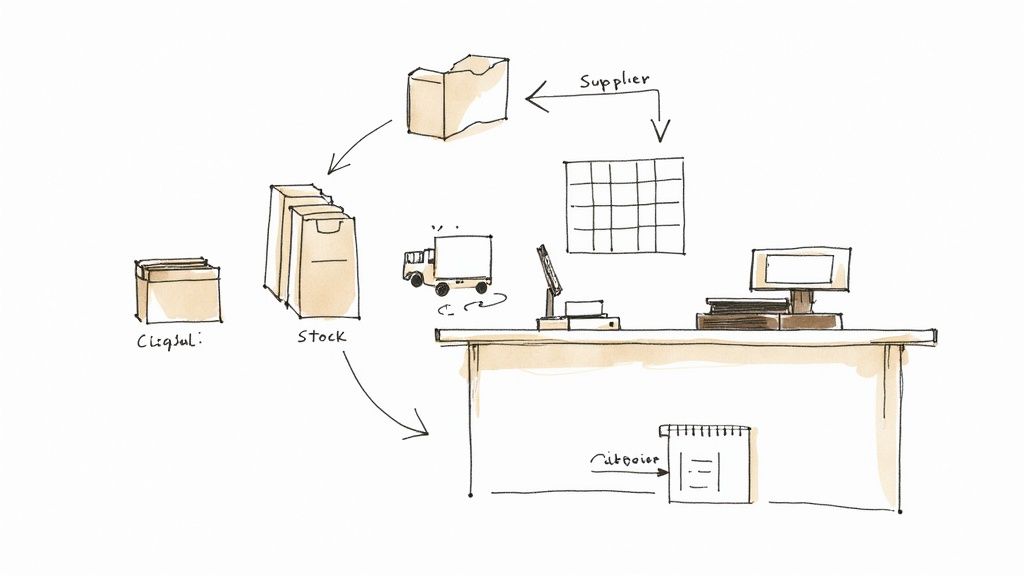
Unlike a service business, a retailer’s cash is often tied up in physical stock. This makes the operating activities section of the cash flow statement crucial. It reconciles net income with actual cash by adjusting for non-cash items like depreciation and, most importantly, changes in working capital accounts such as inventory, accounts receivable, and accounts payable. For instance, a large purchase of inventory before a peak season will show as a significant cash outflow, even if sales have not yet occurred.
Why It’s Critical for African SMEs
Retail is defined by the cash conversion cycle: the time it takes to convert inventory purchases into cash from sales. Global giants like Zara have famously optimised this cycle to maintain lean operations and high cash flow (Lopez & Fan, 2009). For an African SME, a well-structured example cash flow statement helps to:
- Manage Seasonality: Anticipate cash shortages during low seasons and plan for inventory build-up before peak periods like holidays.
- Optimise Supplier Payments: Track payment terms with different suppliers to manage outflows effectively, perhaps negotiating longer terms with key partners.
- Monitor Inventory Health: High inventory levels can strain cash. The statement reveals the direct cash impact of stock management decisions.
Strategic Insight: Your inventory isn’t cash until it’s sold and the payment is in your account. The retail cash flow statement is the tool that measures how efficiently you are making that conversion happen.
Actionable Tips for Retailers
- Integrate Your Point-of-Sale (POS): Connect your POS system directly to your accounting software. This ensures real-time tracking of cash, card, and mobile money inflows, reducing manual reconciliation errors.
- Use a 13-Week Rolling Forecast: This short-term forecast is a powerful tool for retail, providing a week-by-week view of expected cash movements to manage liquidity proactively.
- Track Key Metrics: Monitor inventory turnover and days sales outstanding (DSO). A high turnover and low DSO mean your cash is working efficiently for you. Explore our complete retail business cash flow statement for a deeper dive into these analytics.
2. Manufacturing Business Cash Flow Statement
For manufacturing firms in Africa, from textiles in Ethiopia to automotive parts in South Africa, the cash flow statement is a critical tool for navigating complex production cycles. A manufacturing business cash flow statement is uniquely structured to handle long cash conversion cycles, significant capital investments, and the multi-stage nature of inventory (raw materials, work-in-progress, and finished goods). It provides a detailed view of how cash is generated and used, from procuring raw materials to selling the final product.
Unlike a retailer who buys and sells finished goods, a manufacturer’s cash is tied up in the transformation process. This makes the investing activities section, detailing capital expenditures (CapEx) for machinery and equipment, just as crucial as the operating section. The statement must reconcile net income with actual cash by carefully accounting for large, non-cash depreciation charges and intricate changes in various inventory accounts. A major purchase of raw materials or investment in a new production line will appear as a substantial cash outflow long before it generates revenue.
Why It’s Critical for African SMEs
Manufacturing is defined by its production cycle and capital intensity. The time from paying for raw materials to receiving cash from customers can be lengthy, creating significant liquidity challenges. Lean manufacturing principles, pioneered by companies like Toyota, focus heavily on optimising processes to improve cash flow and reduce waste (Womack, Jones, & Roos, 1990). For an African SME, a detailed example cash flow statement helps to:
- Manage Capital Expenditure: Plan and budget for large machinery purchases without crippling day-to-day operational cash.
- Optimise Production Runs: Align production schedules with sales forecasts and cash availability to avoid tying up capital in unsold finished goods.
- Negotiate Supplier & Customer Terms: Use data on cash cycles to negotiate better payment terms with raw material suppliers (extending Days Payable Outstanding) and faster payments from distributors (reducing Days Sales Outstanding).
Strategic Insight: In manufacturing, cash flow is not just about sales; it’s about the efficiency of your entire production line. The cash flow statement measures how effectively you are converting raw materials and labour into customer payments.
Actionable Tips for Manufacturers
- Implement Just-In-Time (JIT) Inventory: Minimise the cash tied up in raw materials by ordering them only as needed for production. This reduces storage costs and waste, freeing up cash.
- Use a 6-12 Month Rolling Forecast: Given longer production and sales cycles, a longer-term forecast is essential to anticipate capital needs, plan for seasonal demand, and manage large operational outflows.
- Monitor Your Cash Conversion Cycle (CCC): Actively track the components of your CCC: Days Inventory Outstanding (DIO), Days Sales Outstanding (DSO), and Days Payable Outstanding (DPO). The goal is to shorten DIO and DSO while extending DPO. Explore our complete guide to building a manufacturing business cash flow statement for a deeper analysis.
3. Software as a Service (SaaS) Cash Flow Statement
For a subscription-based technology company in Africa, cash flow is the lifeblood that fuels growth long before profits appear on the income statement. A Software as a Service (SaaS) cash flow statement is uniquely structured to manage the disparity between when cash is collected from customers (often upfront for annual plans) and when revenue is recognised (monthly over the contract term). It focuses on tracking key metrics like recurring revenue, customer acquisition costs, and churn to provide a true picture of financial health.
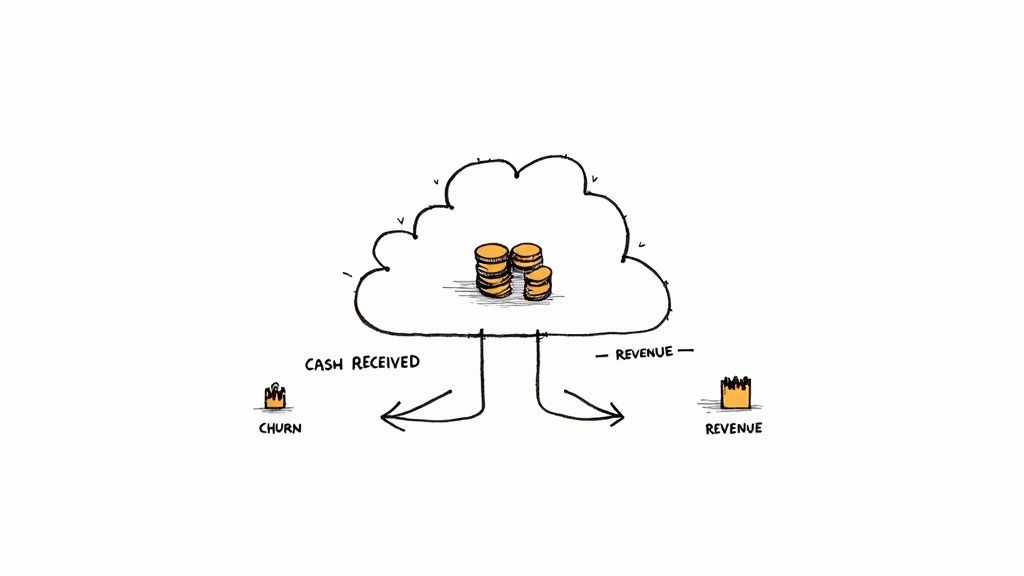
Unlike a traditional business, a SaaS company’s profitability can be misleading. A business might appear unprofitable due to heavy investment in acquiring new customers, yet be incredibly cash-flow positive from collecting annual subscriptions upfront. The operating activities section is therefore critical. It reconciles net income with actual cash by making significant adjustments for non-cash items like changes in deferred revenue, which represents cash received for services not yet delivered. For example, signing a large annual contract generates an immediate cash inflow but the revenue is only recognised incrementally.
Why It’s Critical for African Start-ups
The SaaS model is defined by the relationship between Customer Lifetime Value (LTV) and Customer Acquisition Cost (CAC). As highlighted by venture capitalist David Skok, a sustainable SaaS business must have an LTV significantly greater than its CAC (Skok, 2016). For an African tech start-up, a detailed example cash flow statement helps to:
- Manage Growth Funding: Clearly demonstrate cash burn rate and the CAC payback period to investors, justifying the need for capital to fuel customer acquisition.
- Model Subscription Scenarios: Forecast the cash impact of different pricing tiers, annual vs. monthly plans, and potential customer churn rates.
- Align Spending with Collections: Ensure that spending on marketing and sales is timed correctly with cash inflows from subscription cycles, preventing liquidity crises.
Strategic Insight: In SaaS, revenue is a lagging indicator of performance; cash flow is the leading indicator. Your cash flow statement reveals whether your customer acquisition engine is financially sustainable today, not just profitable in the future.
Actionable Tips for SaaS Businesses
- Separate Cash Received from Recognised Revenue: Your forecast must have distinct lines for cash collected (inflows) and the revenue you recognise on your P&L. This distinction is the core of SaaS financial management.
- Calculate Your CAC Payback Period: Understand precisely how many months of a customer’s subscription payments it takes to recoup the initial cost of acquiring them. This metric directly dictates your cash needs for growth.
- Model Churn Scenarios: Use your cash flow forecast to model the impact of a 5%, 10%, or 15% churn rate on your future cash position. This prepares you for different market conditions and helps you understand your financial runway. Explore our complete SaaS business cash flow statement for templates to build these models.
4. Healthcare Organisation Cash Flow Statement
For clinics, hospitals, and medical practices in Africa, financial health is as critical as patient health. A healthcare organisation cash flow statement is uniquely structured to navigate the sector’s complex and often delayed revenue cycles. It tracks cash inflows from patient payments, insurance reimbursements (including national schemes like NHIF in Kenya), and government funding, against outflows for medical supplies, staff salaries, and capital-intensive equipment purchases.
Unlike many businesses, a healthcare provider’s revenue is not realised at the point of service. Cash flow is dictated by billing cycles, insurance claim processing times, and reimbursement rates, making the operating activities section paramount. This section reconciles net income with actual cash received by heavily adjusting for changes in accounts receivable, which represents the money owed by patients and insurers. A delay in claim processing can create a significant gap between reported profits and available cash.
Why It’s Critical for African SMEs
The healthcare sector operates on an extended revenue cycle: the time from patient registration to the final payment collection. This cycle can be lengthy and unpredictable, influenced by both private and public payers. Global institutions like the Mayo Clinic have invested heavily in revenue cycle management (RCM) to shorten this timeline and improve liquidity (Mayo Clinic, 2021). For an African healthcare SME, a detailed example cash flow statement is essential to:
- Manage Claim Delays: Forecast cash flow based on historical payment speeds from different insurers (e.g., NHIS, private providers) to anticipate shortfalls.
- Optimise Supply Procurement: Align payments for high-cost medical supplies and pharmaceuticals with expected cash inflow cycles to avoid liquidity crises.
- Secure Financing for Growth: A clear cash flow history is crucial for securing loans to purchase new medical equipment or expand facilities.
Strategic Insight: In healthcare, profit on paper means little until the cash is collected. The cash flow statement is the diagnostic tool that measures the health of your revenue cycle and your ability to fund daily operations.
Actionable Tips for Healthcare Providers
- Implement Revenue Cycle Management (RCM) Software: Integrate RCM tools with your accounting system to automate claim submissions, track payment statuses in real-time, and manage denials efficiently.
- Closely Monitor Days in Accounts Receivable (DAR): This metric shows the average number of days it takes to collect payments. A consistently high or rising DAR is a critical warning sign for your cash flow that needs immediate investigation.
- Analyse Payer Mix: Track the payment performance of different payer categories (e.g., government, private insurers, direct patient payments). This data helps you forecast inflows more accurately and negotiate better terms. Explore our complete healthcare cash flow statement for a deeper dive into these analytics.
5. Real Estate and Property Management Cash Flow Statement
For African real estate developers and property managers, the cash flow statement is the definitive measure of an asset’s health and profitability. A real estate and property management cash flow statement is uniquely structured to track long-term assets, recurring rental income, and significant capital expenditures. It categorises inflows from tenant rent collections and outflows for operating expenses like maintenance, utilities, and property taxes, providing a clear view of net operating cash flow.
Unlike a typical business, real estate involves substantial financing and investing activities. The statement carefully separates day-to-day operational cash from funds used for property acquisitions (a major investing outflow) or mortgage payments (a financing outflow). This separation is vital for assessing the core profitability of the property portfolio versus its financing structure. For instance, global REITs like Prologis rely on this detailed tracking to manage vast industrial real estate portfolios and report Funds From Operations (FFO), a key industry metric derived from the cash flow statement (GRI, 2021).
Why It’s Critical for African SMEs
In real estate, cash flow is king. The sector is capital-intensive, and managing liquidity between large, infrequent transactions (like property sales) and regular, smaller transactions (like rent collection) is a constant challenge. A purpose-built example cash flow statement helps property businesses to:
- Assess Asset Performance: Determine if a property generates enough positive cash flow to cover its own operating costs and debt service.
- Plan Capital Expenditures (CapEx): Forecast and save for major future expenses like roof replacements or HVAC system upgrades, preventing cash flow crises.
- Secure Financing: Lenders heavily scrutinise the Debt Service Coverage Ratio (DSCR), a metric calculated directly from the cash flow statement, to evaluate loan applications.
Strategic Insight: Your property’s value on paper is theoretical; its cash flow is its real-world performance. The real estate cash flow statement translates asset value into tangible, operational liquidity.
Actionable Tips for Property Managers
- Model Occupancy Scenarios: Build multi-year cash flow forecasts with different occupancy rate scenarios (e.g., 95%, 85%, 75%) to stress-test your portfolio’s resilience and identify potential shortfalls.
- Separate CapEx from OpEx: Create a reserve account for future capital expenditures. Treat contributions to this reserve as a regular operating cash outflow in your forecasts to ensure funds are available when needed.
- Track Key Metrics: Continuously monitor your DSCR and tenant retention rates. High retention reduces turnover costs (e.g., marketing, unit preparation), which directly improves your operating cash flow. Explore our complete real estate cash flow statement template for a deeper analysis.
6. Non-Profit Organisation Cash Flow Statement
For non-profit organisations (NPOs) and charities across Africa, financial stewardship is paramount to maintaining donor trust and achieving mission impact. A non-profit organisation cash flow statement is uniquely structured to reflect a funding model based on grants and donations rather than sales. It focuses on tracking inflows from fundraising campaigns, grant disbursements, and membership fees, and outflows for programme delivery, administrative costs, and fundraising expenses, providing a transparent view of how funds are utilised.
Unlike for-profit entities, an NPO’s financial health isn’t measured by profit but by its ability to sustainably fund its mission. The cash flow statement is therefore essential for demonstrating accountability to donors, grantors, and regulatory bodies. The operating activities section is adapted to show cash received from contributions and grants and cash paid to employees, suppliers, and for programme-specific activities. This is critical for managing the often-lump-sum nature of grant funding against the steady drumbeat of operational expenses.
Why It’s Critical for African NPOs
The lifeblood of a non-profit is its ability to manage restricted and unrestricted funds. Restricted funds, often from grants, must be used for specific projects, while unrestricted funds, typically from general donations, offer operational flexibility. A properly organised example cash flow statement helps to:
- Manage Grant Cycles: Track the timing of grant inflows against project expenditure, preventing cash shortfalls during implementation phases. For example, a grant for a community health project may be received upfront, but the cash will be spent over many months.
- Demonstrate Financial Prudence: Provide clear evidence to donors and grant-making bodies that their funds are being managed responsibly and efficiently.
- Plan for Sustainability: Identify funding gaps and plan fundraising activities by understanding the seasonal patterns of donations, such as increased giving during festive seasons or specific awareness months.
Strategic Insight: For a non-profit, the cash flow statement is more than a financial report; it’s a statement of accountability. It proves to stakeholders that you are effectively converting their contributions into tangible social impact.
Actionable Tips for Non-Profits
- Segregate Restricted and Unrestricted Cash: Create distinct line items or even separate bank accounts for restricted grants versus unrestricted donations. This simplifies reporting and ensures compliance with donor requirements.
- Build an Operating Reserve: Aim to maintain an emergency cash reserve equivalent to 3-6 months of operating expenses. This provides a crucial buffer against unexpected funding delays or economic downturns (NCS, 2018).
- Develop a Grant Pipeline Forecast: Map out potential grant application deadlines, expected decision dates, and disbursement schedules. This turns your fundraising strategy into a predictable cash flow forecast, helping to smooth out income volatility.
7. Construction Company Cash Flow Statement
For construction firms in Africa, managing cash flow is a high-stakes balancing act dictated by long project cycles and mismatched revenue and expense streams. A construction company cash flow statement is specifically structured to handle these complexities. It tracks large, infrequent inflows from client milestone payments against consistent outflows for labour, materials, and equipment, providing a clear view of a project’s financial viability.
Unlike a standard business, a construction firm’s cash flow is not smooth. It’s defined by significant upfront costs for materials and mobilisation, while revenue is often delayed by lengthy client approval processes and retainage (a portion of the agreed price withheld until the project is completed). The cash flow statement must therefore meticulously separate cash movements by project, highlighting which contracts are funding operations and which are draining liquidity.
Why It’s Critical for African SMEs
The construction industry is capital-intensive, and delays are common, making cash flow management a primary determinant of success or failure. For an African construction SME, a detailed example cash flow statement is essential to:
- Manage Project-Based Cash Gaps: Identify and plan for periods where project expenses far exceed incoming payments. This is crucial for scheduling material purchases and subcontractor payments.
- Secure Financing: Banks and investors require robust, project-specific cash flow forecasts to approve loans for equipment purchases or working capital.
- Price Bids Accurately: Understanding the true cash cycle of a project, including potential delays, allows for more accurate and profitable bidding. As noted by Akintoye and Skitmore (1991), inaccurate pricing models are a major risk in the industry.
Strategic Insight: In construction, you aren’t just managing money; you are managing time. Your cash flow statement is the ultimate project timeline, translating milestones, retainage, and supplier credit terms into a tangible financial reality.
Actionable Tips for Construction Firms
- Create Per-Project Forecasts: Develop a separate, detailed cash flow forecast for each major project. This allows you to aggregate the forecasts to get a company-wide view and anticipate inter-project cash needs.
- Negotiate Mobilisation Fees: Whenever possible, negotiate an upfront payment (mobilisation fee) to cover initial costs for materials and site setup. This immediately improves a project’s initial cash position.
- Track Retainage Diligently: Keep a precise schedule of all retainage amounts and their expected release dates. Actively follow up on these payments, as they often represent a project’s entire profit margin.
8. E-Commerce and Online Retail Cash Flow Statement
For African e-commerce ventures, from Shopify store owners to Jumia marketplace sellers, cash flow is a different beast compared to traditional retail. An e-commerce cash flow statement is specifically designed to navigate the digital transaction landscape, accounting for online payment processor fees, shipping logistics, digital advertising spend, and the crucial time lag between customer payment and funds actually landing in a bank account. It captures the unique velocity and complexity of online sales.
Unlike a physical store where cash intake is immediate, an online business deals with a “payment processor float”. This is the period when a customer’s money is held by platforms like Paystack or Flutterwave before being deposited. The operating activities section of this specific example cash flow statement must therefore meticulously track cash outflows for inventory and marketing against the actual, delayed cash inflows, while also accounting for variable costs like shipping and customer returns.
Why It’s Critical for African SMEs
The digital marketplace is defined by rapid transactions and a complex chain of cash movements. For an African SME selling online, a tailored cash flow statement is essential to:
- Manage Payment Processor Lags: Understand the real-world impact of a 2-5 day delay from payment processors on your ability to pay suppliers or run ad campaigns.
- Track Unit Economics: Clearly see the cash impact of customer acquisition costs (CAC), shipping, and return rates on a per-transaction basis. This is vital for pricing strategy and profitability.
- Forecast for Volatility: E-commerce sales can fluctuate wildly based on marketing campaigns or seasonal trends. The statement provides the data needed for accurate, short-term forecasting.
Strategic Insight: In e-commerce, revenue doesn’t equal cash. Your cash flow statement reveals the true health of your business by tracking when money from sales is actually available to be used.
Actionable Tips for E-Commerce Retailers
- Integrate Your Platforms: Connect your e-commerce platform (e.g., Shopify, WooCommerce) and payment gateways directly with your accounting software to automate the tracking of sales, fees, and payouts.
- Model Your Return Rates: Analyse historical data to forecast the cash impact of customer returns and refunds. Set aside a cash reserve to handle this expected outflow without disrupting operations.
- Align Supplier and Payout Cycles: Negotiate payment terms with suppliers that align with your payment processor’s deposit schedule. This helps prevent a cash crunch where you have to pay for goods before receiving the sales revenue for them. You can manage these terms efficiently with tools like a free invoicing software platform.
9. Cash Flow Statements — 8 Business Examples
| Statement Type | Implementation Complexity | Resource Requirements | Expected Outcomes | Ideal Use Cases | Key Advantages |
|---|---|---|---|---|---|
| Retail Business Cash Flow Statement | Medium–High — frequent transactions, multi-location adds complexity | POS integration, inventory systems, frequent reconciliations | Short-term cash visibility; early detection of seasonal crunches | Brick-and-mortar chains, specialty stores, seasonal retailers | Optimizes working capital; improves vendor payment management |
| Manufacturing Business Cash Flow Statement | High — multiple inventory stages and CapEx planning | ERP/production data, forecasting, capital budgeting tools | Long-cycle cash forecasting; CapEx visibility | Discrete manufacturers, heavy industry, production plants | Aligns production schedules with cash; supports supply chain optimization |
| SaaS Cash Flow Statement | Medium — deferred revenue and subscription timing issues | Subscription billing, cohort analysis, CAC tracking | Predictable recurring cash forecasts; CAC payback insight | Subscription software companies, cloud services | Stable recurring revenue visibility; scalable cash modeling |
| Healthcare Organization Cash Flow Statement | High — complex payer rules and claim delays | Revenue cycle management, payer-specific tracking, compliance tools | Forecasts with reimbursement delays; bad-debt provisioning | Hospitals, clinics, medical practices | Manages insurance timing; supports revenue-cycle optimization |
| Real Estate & Property Management Cash Flow Statement | Medium — long-term assets and financing events | Lease management, capital planning, debt service tracking | Multi-year cash visibility; DSCR and NOI analysis | REITs, developers, property managers | Predictable rental income modeling; supports capital improvements |
| Non-Profit Organization Cash Flow Statement | Medium — fund restrictions and grant timing | Fund accounting, grant tracking, donor management | Transparent restricted/unrestricted cash forecasts; compliance-ready | Charities, foundations, grant-funded programs | Segregates restricted funds; aids grant and donor reporting |
| Construction Company Cash Flow Statement | High — project-based revenue and retainage issues | Project accounting, progress billing, lines of credit | Project-level cash tracking; identifies financing gaps | General contractors, subcontractors, project managers | Enables project cash forecasts; supports mobilization and financing |
| E-Commerce & Online Retail Cash Flow Statement | Medium — high transaction volume, multiple payment channels | Payment processor integration, inventory/logistics, automation | Real-time cash position; short conversion cycles | Online retailers, marketplace sellers, omnichannel stores | Automation yields near-real-time visibility; diversified revenue channels |
10. From Statement to Strategy: Automating Your Cash Flow for Growth
We have journeyed through a diverse range of industries, from the tangible inventory of a retailer to the recurring revenue of a SaaS business, and the project-based cycles of a construction company. Each example cash flow statement has served as more than just a template; it has been a lens through which we can view the unique financial pulse of a business. The core lesson is clear: the statement of cash flows is not merely a historical record but a dynamic strategic tool.
By dissecting these statements, we’ve moved beyond simply identifying the sources and uses of cash. We have uncovered the narratives hidden within the numbers. We saw how a retailer’s cash flow is tied to inventory turnover, how a SaaS company’s strength lies in its operating cash flow from subscriptions, and how a construction firm must meticulously manage project-specific inflows and outflows. These nuances are the difference between surviving and thriving.
Synthesising Your Strategic Takeaways
Mastering the cash flow statement is fundamentally about control. It provides the clarity needed to make informed decisions, whether that’s timing a major equipment purchase, planning an expansion, or simply ensuring you can meet payroll during a slow month. The insights derived from a well-analysed statement directly impact your operational agility and long-term viability.
Let’s consolidate the key strategic principles we’ve explored:
- Operating Activities are the Engine: For any healthy business, the cash flow from operating activities (CFO) must be consistently positive. A negative CFO, as highlighted by IFRS Foundation resources, is a significant red flag, suggesting the core business model is not generating sufficient cash to sustain itself.
- Context is Everything: A large cash outflow from investing activities is not inherently negative. If it represents investment in new machinery or technology that will boost future productivity, it is a sign of growth. Conversely, a positive cash inflow from selling assets could signal distress if the company is liquidating core components to stay afloat.
- The Direct vs. Indirect Method: While both methods arrive at the same net cash flow figure, they offer different perspectives. The indirect method is excellent for reconciling net income with cash flow, highlighting non-cash expenses like depreciation. The direct method, however, provides a clearer, more intuitive picture of actual cash receipts and payments, which many operational managers find more useful for day-to-day decisions.
Strategic Insight: Your cash flow statement is a diagnostic tool. Use the trends in operating, investing, and financing activities to pinpoint strengths and weaknesses before they become critical problems. Consistent analysis transforms this financial report from a compliance document into a core component of your strategic planning process.
Actionable Next Steps: From Analysis to Automation
Understanding the past is crucial, but true strategic advantage comes from anticipating the future. The historical data in your cash flow statement provides the foundation for this forward-looking perspective. To move beyond historical reporting and gain a forward-looking perspective essential for growth, understanding various 7 powerful cash flow forecasting methods for SMBs can equip your business with the tools to predict future cash positions accurately.
Armed with the knowledge from each example cash flow statement in this guide, your next step is to operationalise these insights. Begin by automating the data collection process. Manual data entry and reconciliation are not only time-consuming but also prone to errors that can lead to flawed analysis and poor decision-making. As research from entities like the Association of Chartered Certified Accountants (ACCA) often points out, technology adoption is a key differentiator for successful SMEs. Integrating your invoicing, payment processing, and expense tracking into a single system is the most effective way to ensure the data feeding your financial statements is accurate and up-to-date. This frees up your time to focus on what truly matters: strategy, not spreadsheets.
Ready to transform your cash flow management from a manual chore into an automated, strategic advantage? CRM Africa integrates invoicing, payment collection (including mobile money), and client management into one seamless platform, giving you real-time data to build an accurate cash flow statement effortlessly. Explore how CRM Africa can bring clarity and control to your business finances today.