
Choosing the right Customer Relationship Management (CRM) software is a critical decision for any Small or Medium-sized Enterprise (SME) in Africa. The right platform can streamline sales, improve customer service, and unlock significant growth. However, many generic CRMs fail to address the unique challenges of the African market, such as diverse payment systems, multi-currency transactions, and the need for mobile-first accessibility. This guide provides detailed examples of CRM software, focusing on solutions that cater specifically to the operational realities of businesses across Nigeria, Kenya, South Africa, and beyond.
We will analyse key features like M-PESA and mobile money integration, review pricing models, and offer practical insights to help you make an informed choice. Each entry includes a concise description, pros and cons, screenshots, and direct links to help you evaluate the platform efficiently. We’ve organised this list to help you move from research to implementation with confidence.
Navigating the crowded market can be challenging, especially when you need a system that aligns with both your budget and your operational needs from day one. For a more in-depth look at various options and considerations, you can refer to a comprehensive guide on the best CRM software for startups. This resource will help you find a CRM that not only manages contacts but also supports your long-term success.
1. CRM Africa
CRM Africa stands out as a powerful, all-in-one platform meticulously designed for African small and medium-sized enterprises (SMEs). It offers a comprehensive suite of tools that integrates customer relationship management with project management, invoicing, and billing. This centralisation addresses a key challenge for growing businesses: reducing software clutter and streamlining operations from lead capture to final payment.
The platform's most significant differentiator is its native support for pan-African payment systems. For businesses operating in markets like Kenya, Nigeria, or Ghana, this is a game-changer. As one user, Sarah Mwangi of TechSolutions Kenya, noted, “The mobile money integration made it so easy for our customers to pay us instantly.” This focus on local payment rails removes friction from the cash collection cycle, a critical factor for business sustainability, as a GSMA report highlights the importance of digital payments for SME growth in emerging markets.

Core Features & Benefits
CRM Africa is more than just a contact database; it is a complete operational hub. Its feature set is built to manage the entire client lifecycle within a single, mobile-responsive workspace. This approach provides a clear understanding of what client relationship management is and how it impacts business growth.
- Integrated Payments: Native support for M-PESA, mobile money, and gateways like Flutterwave, Paystack, and Pesapal enables one-click invoice payments and automatic reconciliation.
- No Per-Seat Licensing: Teams can add users without incurring additional license fees, making it highly scalable for startups and growing agencies.
- All-in-One Functionality: It consolidates a visual sales pipeline, task management, contracts with e-signatures, a support desk, and robust analytics into one platform.
- Client Portals: Businesses can offer clients a branded, professional dashboard to track project progress and payments, enhancing transparency and retention.
Pricing Structure
CRM Africa offers a genuinely free-forever plan with a full feature set, ideal for small teams. Paid plans scale with usage limits and advanced features:
- Kick Start: ~$69.99/month
- Thunder: ~$99.99/month
- Enterprise: ~$299/month
Pros and Cons
| Pros | Cons |
|---|---|
| Generous free-forever plan with a full feature set. | Free plan has usage caps; growing teams will need to upgrade. |
| No per-seat licensing model is cost-effective for scaling. | Some performance metrics (uptime SLAs, customer counts) are not publicly published. |
| Native pan-African payment support simplifies cash collection. | Specific payment gateway availability may vary by country and require confirmation. |
| True all-in-one platform reduces tool sprawl and costs. |
Website: https://crm.africa
2. Salesforce Sales Cloud
As one of the most recognised names in the industry, Salesforce Sales Cloud offers an enterprise-grade solution that stands out for its profound customisation and scalability. According to IDC, Salesforce holds the largest share of the worldwide CRM market, underscoring its dominance. This platform is a powerhouse for businesses aiming to move beyond basic contact management, offering deep analytics, sales forecasting, and robust pipeline management. It's an ideal step up for companies finding that tools like WhatsApp are no longer sufficient for managing complex sales cycles and require a more structured approach. Learn more about graduating from basic tools in our article on why your business needs to move beyond the WhatsApp trap.
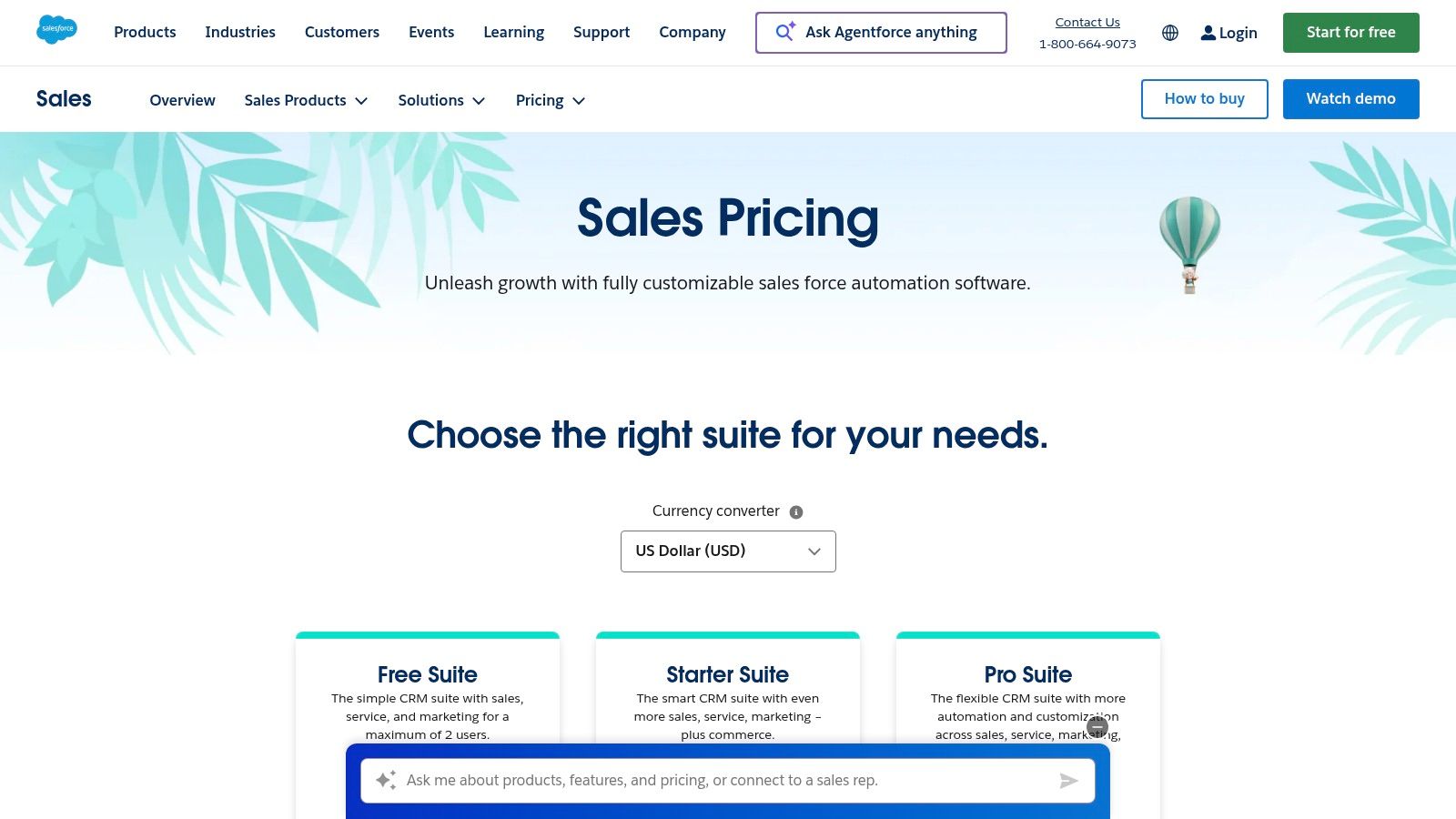
The platform’s strength lies in its extensive AppExchange, an marketplace offering thousands of integrations to tailor the CRM to specific industry needs, from finance to healthcare. While there are no direct, out-of-the-box integrations for African mobile money systems like M-PESA, its powerful API allows for custom development to connect with local payment gateways. However, this level of customisation can lead to a steep learning curve and higher implementation costs. The pricing structure, which often requires annual billing beyond the entry-level "Starter" edition, can also be a significant consideration for SMEs carefully managing their cash flow.
Website: https://www.salesforce.com/sales/pricing/
- Best For: Medium to large enterprises needing deep customisation and extensive third-party integrations.
- Pricing: Starts at $25 per user/month (billed annually). A 30-day free trial is available.
- Pros: Highly customisable, powerful analytics, and a massive ecosystem of integrations.
- Cons: Can become very expensive, requires significant setup, and lacks native African mobile money support.
3. HubSpot Customer Platform (Sales Hub)
HubSpot has become a go-to platform for businesses seeking a powerful, all-in-one solution that grows with them. Its standout feature is an incredibly robust free CRM, making it an excellent starting point for startups and SMEs. The platform is organised into "Hubs" for sales, marketing, and service, allowing companies to adopt the tools they need and expand as their requirements evolve. This modular approach makes it one of the most accessible yet comprehensive examples of CRM software available. Learn more about its free offering in our guide to free CRM tools for African businesses.
HubSpot's strength lies in its user-friendly interface and extensive library of educational resources, which significantly shortens the learning curve. A survey by G2 found that user-friendliness is a top factor for CRM satisfaction, an area where HubSpot consistently ranks high. The platform offers a massive app marketplace for integrations, though direct support for African payment gateways like M-PESA typically requires a third-party connector. While the free tools are generous, accessing more advanced features like sophisticated automation and analytics often means upgrading to more expensive bundles. Furthermore, mandatory paid onboarding for Professional and Enterprise tiers can be a significant upfront cost for smaller organisations.
Website: https://www.hubspot.com/products/pricing-cr115
- Best For: Startups and SMEs looking for a free, powerful CRM with the option to scale into an all-in-one sales and marketing platform.
- Pricing: Offers a comprehensive free plan. Paid "Sales Hub" plans start at approximately $15 per user/month (billed annually).
- Pros: Excellent free CRM, very user-friendly with strong educational support, and scales well from small teams to large enterprises.
- Cons: Can become costly as you add more Hubs or users, and advanced features are locked behind higher-tier plans.
4. Zoho CRM
Zoho CRM presents one of the most compelling value propositions among examples of CRM software, offering a comprehensive suite of tools that extends far beyond basic contact management. It's particularly attractive for its deep integration with the wider Zoho ecosystem, which includes over 40 business applications covering everything from finance to project management. The platform features powerful automation through its "Blueprints" system, which guides sales teams through processes, and an AI assistant named Zia to help with predictions and task automation.

This all-in-one approach makes it an excellent choice for businesses looking to consolidate their software stack. For African SMEs, Zoho's integration with payment gateways like PayGate and DPO Pay offers a practical solution for accepting local payments. While it lacks native, built-in M-PESA functionality, these third-party connectors provide a viable workaround. Its generous free edition for up to three users provides a risk-free entry point for startups, though unlocking its more powerful analytics and AI features requires upgrading to a paid plan. The platform's extensive customisation can also present a learning curve for new teams.
Website: https://www.zoho.com/crm/zohocrm-pricing.html
- Best For: SMEs seeking an affordable, all-in-one platform with a strong ecosystem of integrated business apps.
- Pricing: A free plan is available for up to 3 users. Paid plans start at $14 per user/month (billed annually).
- Pros: Excellent value for money, a comprehensive suite of native integrations, and a robust free edition.
- Cons: Advanced features are locked behind higher-tier plans, and the learning curve can be steep for complex customisations.
5. Microsoft Dynamics 365 Sales
For organisations heavily invested in the Microsoft ecosystem, Dynamics 365 Sales presents a compelling and integrated solution. This platform moves beyond standard contact management, embedding itself deeply within tools like Outlook, Teams, and the wider Microsoft 365 suite. Its key differentiator is the native integration of Copilot AI, which assists with sales automation and forecasting, offering a familiar user experience for teams already accustomed to Microsoft's interface. It is a robust example of CRM software designed for businesses seeking enterprise-grade security and compliance within a unified tech stack.
While the tight integration offers significant workflow efficiencies, its complexity and pricing model can be a hurdle for smaller businesses. The platform offers multiple editions, from "Professional" to "Enterprise", but costs are calculated per user and are typically billed annually, which requires careful financial planning. Similar to other large-scale CRMs, it lacks direct, out-of-the-box integrations for African mobile money services like M-PESA. Connecting to local payment gateways necessitates custom development via its API, adding another layer of implementation complexity and cost that SMEs in the region must consider.
Website: https://www.microsoft.com/en/dynamics-365/products/sales/pricing
- Best For: Medium to large businesses already using Microsoft 365 that require deep integration and AI-powered sales tools.
- Pricing: Starts at $65 per user/month. A 30-day free trial is available.
- Pros: Seamless integration with the Microsoft ecosystem, powerful AI features, and strong security.
- Cons: Can be expensive and complex to implement for SMEs, and lacks native support for African payment systems.
6. Pipedrive
Pipedrive is a CRM built by salespeople, for salespeople, and its design reflects a deep understanding of the sales process. The platform is celebrated for its visual sales pipeline, which allows teams to track deals through customisable stages with a simple drag-and-drop interface. This intuitive, activity-based approach helps ensure that sales reps focus on the actions that close deals, making it one of the most user-friendly examples of CRM software for teams that prioritise simplicity and rapid adoption. It’s an excellent choice for businesses that need to get their sales process organised quickly without a lengthy implementation period.
While Pipedrive doesn't offer native African payment integrations, its marketplace provides access to over 500 apps, including tools like Zapier that can create bridges to local payment systems. This flexibility allows for a degree of customisation, but it requires some technical setup. The pricing is straightforward, but essential features like advanced reporting and automation are reserved for higher-tier plans. Furthermore, add-ons for document management and e-signatures can increase the total cost, which is a key consideration for small businesses managing their budget.
Website: https://www.pipedrive.com/en/pricing
- Best For: Small to medium-sized sales teams that need a highly intuitive, visual tool to manage their deal flow.
- Pricing: Starts at €14.90 per user/month (billed annually). A 14-day free trial is available.
- Pros: Extremely easy to use and adopt, excellent visual pipeline management, and fast to deploy.
- Cons: Can become costly with necessary add-ons, and some critical features are locked behind more expensive plans.
7. Freshsales by Freshworks
Freshsales, part of the Freshworks ecosystem, offers a modern, all-in-one sales CRM that appeals to businesses looking for simplicity and power without the complexity of enterprise-level platforms. It integrates key communication channels directly into the platform, featuring built-in phone, email, and chat capabilities. This unified approach helps sales teams engage with prospects and customers across multiple touchpoints from a single screen, streamlining workflows and improving response times. Its AI-powered assistant, Freddy, provides predictive lead scoring and sales insights, helping teams prioritise their efforts effectively.

For African SMEs, Freshsales presents a compelling proposition with its generous free plan for up to three users and competitive pricing on its paid tiers. The platform's intuitive interface reduces the learning curve, allowing teams to get started quickly. While it lacks native integrations for African mobile money systems, its marketplace and API offer pathways for custom connections to local payment solutions. However, accessing the more advanced AI features and in-depth analytics often requires upgrading to the higher-priced Pro or Enterprise plans, which could be a consideration for businesses on a tight budget. Freshsales is one of the more accessible examples of crm software for growing teams.
Website: https://www.freshworks.com/crm/pricing/
- Best For: Small to medium-sized businesses looking for an affordable, all-in-one CRM with built-in communication tools.
- Pricing: A free plan is available for up to 3 users. Paid plans start from $15 per user/month (billed annually). A 21-day free trial is offered.
- Pros: Generous free forever plan, built-in telephony and chat, and an intuitive user interface.
- Cons: Advanced analytics and AI features are restricted to higher tiers, and the integration ecosystem is smaller than major competitors.
8. monday sales CRM
Built on the highly visual and flexible monday.com Work OS, monday sales CRM is designed for teams that value speed, adaptability, and a user-friendly interface. It transforms complex sales data into intuitive, colour-coded boards, making it simple to track leads, manage contacts, and visualise sales pipelines at a glance. This approach is excellent for businesses that want to get up and running quickly without a dedicated IT team, offering a more engaging experience than traditional spreadsheet-based systems.

The platform shines with its no-code automations and extensive template library, allowing teams to streamline repetitive tasks and customise workflows without writing any code. With over 200 integrations, it connects easily with popular tools, although direct support for African payment systems like M-PESA is not built-in and would require a third-party connector or custom solution. A significant consideration for smaller startups is the purchasing model, which has a minimum requirement of three user seats. This makes it one of the more accessible examples of crm software for small teams but less so for solo entrepreneurs.
Website: https://monday.com/crm/pricing/
- Best For: Fast-moving sales teams in small to medium businesses that need a highly visual and customisable CRM.
- Pricing: Starts at R210 per user/month (billed annually, 3-seat minimum). A 14-day free trial is available.
- Pros: Highly intuitive and visual interface, extensive no-code automation capabilities, and a strong ecosystem of templates and integrations.
- Cons: Minimum purchase of three seats can be a barrier for very small teams, and lacks native African mobile money integrations.
9. Odoo CRM
Odoo presents a unique proposition as an open-core, all-in-one business management suite, where the CRM is just one part of a much larger ecosystem. This modular approach allows businesses to start with a CRM and later add accounting, project management, or e-commerce functionalities as they grow. Its "One App Free" model is particularly compelling for startups, offering the full-featured CRM app for unlimited users at no cost, which is a rare find among comprehensive examples of crm software.

The platform’s real value shines when a business adopts multiple Odoo apps, as they integrate seamlessly to create a unified system. For African businesses, third-party modules are available in the Odoo App Store that can connect with payment gateways like Paystack and Flutterwave, enabling mobile money collections. However, the sheer breadth of configuration options can be overwhelming for new users, often requiring dedicated time for setup or the help of an implementation partner. While the core CRM is powerful, unlocking its full potential might necessitate paid customisations or upgrading to the full suite.
Website: https://www.odoo.com/pricing
- Best For: SMEs looking for an integrated, all-in-one business suite that can scale beyond just CRM functionality.
- Pricing: One app is free for unlimited users. The full suite starts at a per-user, per-month fee that varies by region.
- Pros: Excellent value when using multiple apps, flexible cloud or on-premise hosting, and a powerful free CRM tier.
- Cons: The platform's breadth can lead to a steep learning curve, and some advanced features require paid customisation plans.
10. Bitrix24
Bitrix24 goes beyond being a typical CRM, offering an all-in-one collaboration platform designed to centralise nearly every aspect of business operations. It combines CRM with project management, internal communications, and even website building, making it one of the more comprehensive examples of crm software available. This integrated approach aims to reduce the need for multiple disparate applications, offering a single environment for sales, marketing, and team collaboration.
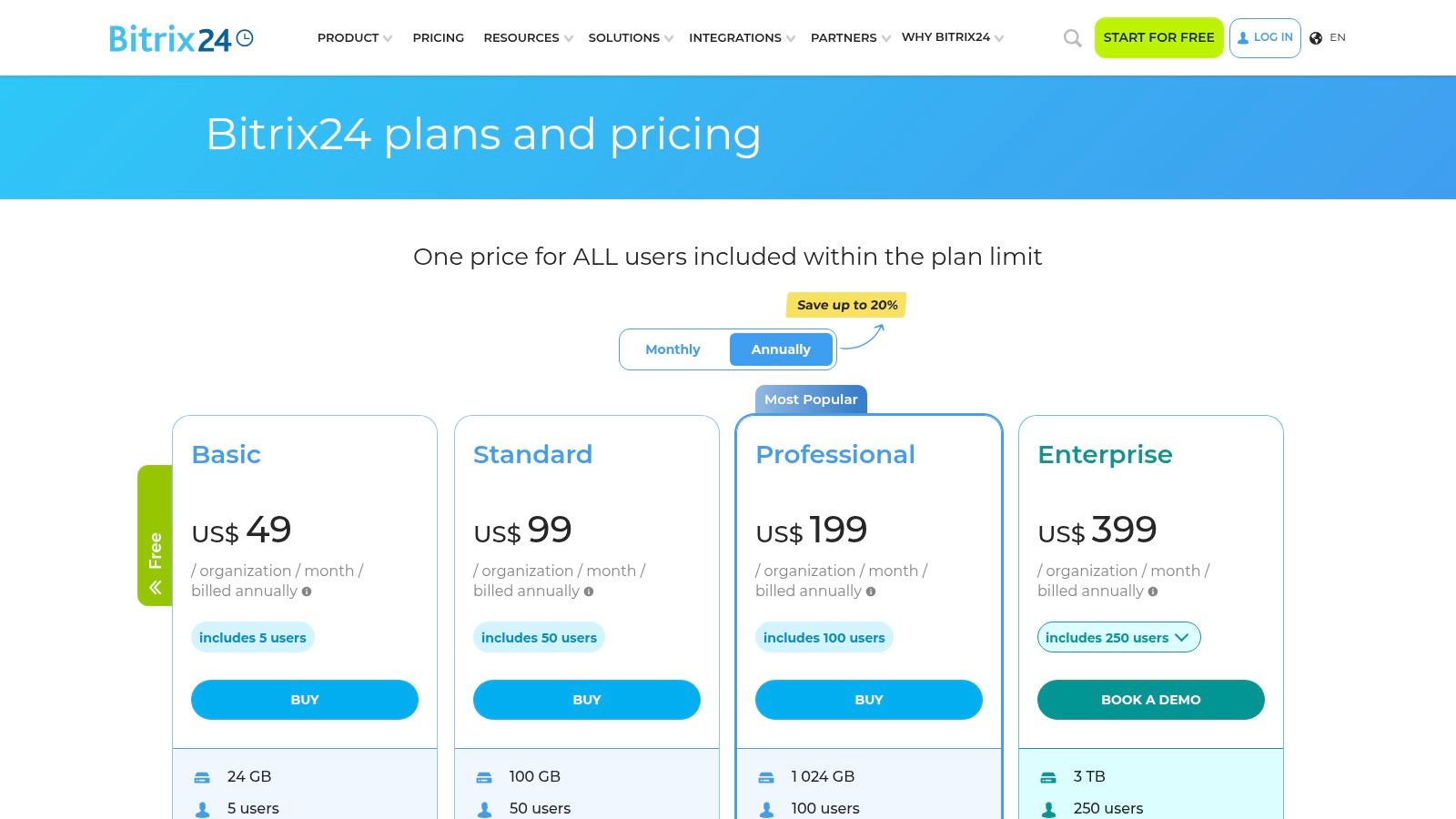
The platform is available in both cloud and on-premises editions, providing flexibility for businesses with specific data security requirements. Its most notable feature is the flat-rate pricing model for paid tiers, which can be highly cost-effective for growing teams, as you pay one price for a set number of users rather than per seat. However, the sheer breadth of its feature set can make the user interface feel overwhelming for new users, and some of the more advanced CRM functionalities are reserved for the higher-priced professional plans.
Website: https://www.bitrix24.com/prices/
- Best For: SMEs looking for a single platform to manage CRM, projects, and internal communication.
- Pricing: A free plan with unlimited users (storage and feature limited). Paid plans start at a flat rate of $49/month for 5 users.
- Pros: Flat-rate pricing offers excellent value for growing teams; broad toolset reduces the need for multiple apps.
- Cons: The user interface can feel complex and cluttered; advanced CRM features are only available in higher tiers.
11. Skynamo
Originating from South Africa, Skynamo is a mobile-first field sales CRM designed specifically for manufacturers, distributors, and wholesalers. It addresses the unique challenges of outside sales teams, moving beyond standard contact management to provide tools for route planning, on-the-go order capture, and real-time stock visibility. The platform is engineered for environments with intermittent connectivity, making it a robust choice for field representatives working across diverse African regions where reliable internet access isn't always a given.
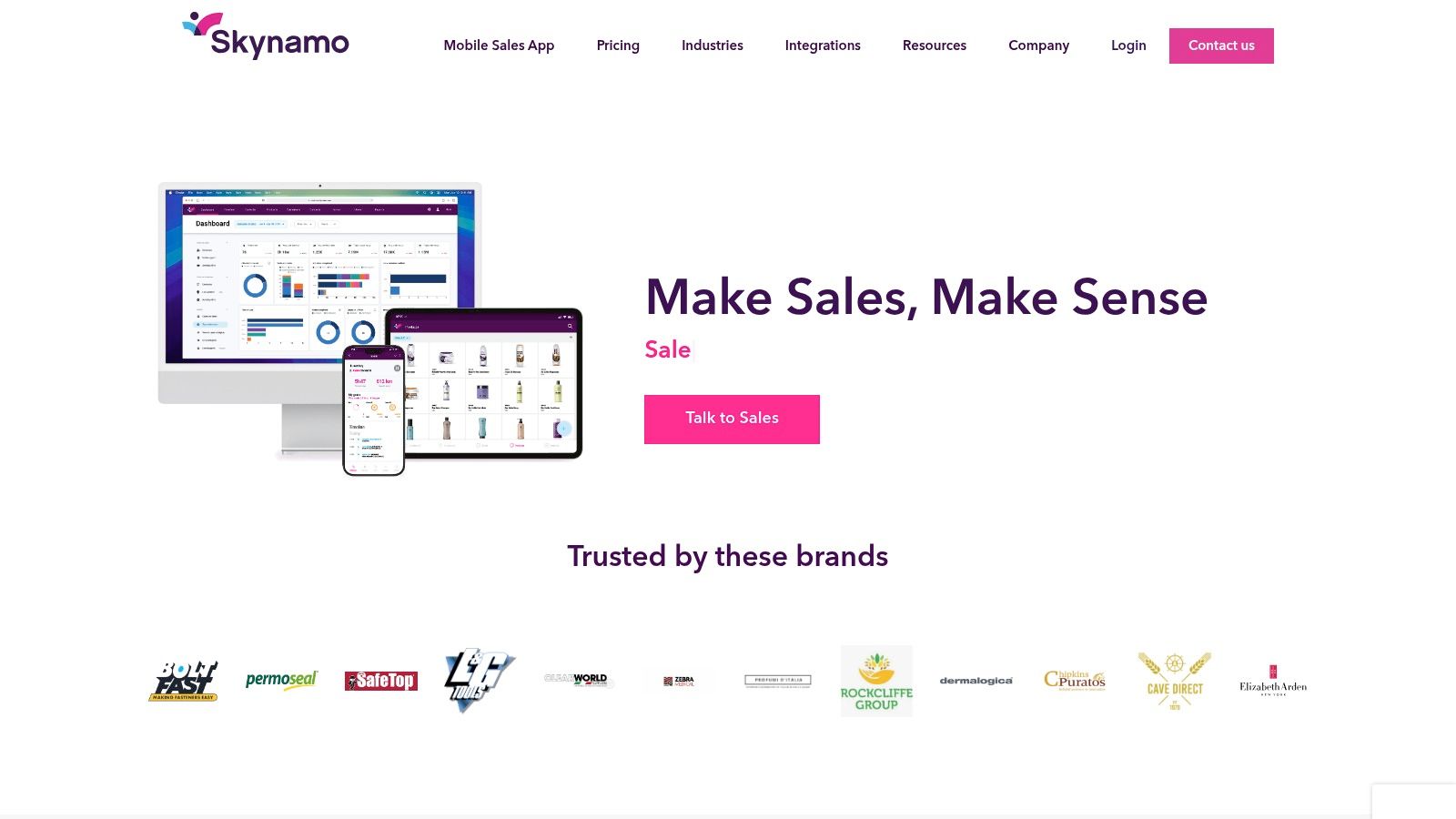
Skynamo’s strength lies in its deep focus on the B2B sales workflow. Features like digital catalogues, customisable pricing lists, and detailed customer order history empower sales reps to have more informed conversations and close deals more efficiently in the field. The platform also boasts a significant number of integrations, managed by an in-house team to ensure smooth connectivity with various ERP systems. However, this specialised approach means it lacks the broad, general-purpose features of other examples of crm software, and its quote-based pricing model requires direct engagement, lacking the transparency of a public price list.
Website: https://skynamo.com/
- Best For: Manufacturers, wholesalers, and distributors with field sales teams needing mobile and offline capabilities.
- Pricing: Available by quote only. No free trial is publicly listed.
- Pros: Purpose-built for field sales workflows, strong offline functionality, and proven fit in the Southern African market.
- Cons: Pricing is not transparent, and its narrow focus may not suit businesses outside of manufacturing or distribution.
12. Capterra South Africa (CRM category)
Instead of being a CRM itself, Capterra South Africa serves as a crucial resource for businesses looking for examples of CRM software tailored to the local market. It’s a comprehensive software marketplace that allows users to filter, compare, and read verified user reviews for hundreds of CRM products. This platform is invaluable for South African SMEs wanting to conduct thorough due diligence before committing to a system, providing side-by-side comparisons of features, pricing, and user satisfaction ratings.
The platform’s strength lies in its localised focus and extensive library of user-generated reviews, which offer practical insights that vendor marketing materials often lack. While Capterra itself does not handle transactions, it provides direct links to vendor websites for trials or purchases. A key consideration is that sponsored listings often appear at the top, so it’s wise to use the filtering and sorting tools to organise results based on user ratings or number of reviews for a more objective view. This approach helps ensure you find the best fit for your specific business needs.
Website: https://www.capterra.co.za/directory/2/customer-relationship-management/software
- Best For: South African businesses wanting to compare multiple CRM options based on verified user reviews and local relevance.
- Pricing: Free to use for research and comparison.
- Pros: Highly relevant for the South African market, provides transparent user reviews, and offers powerful comparison tools.
- Cons: Top search results can be influenced by sponsored placements, and users must navigate to third-party sites to buy.
Top 12 CRM Solutions Comparison
| Product | Core features & USPs | UX & Integrations | Target audience | Pricing & Value |
|---|---|---|---|---|
| CRM Africa | All‑in‑one CRM + projects + invoicing + client portals; native pan‑African payments (mobile money, M‑PESA); no per‑seat licensing; automatic reconciliation | Mobile‑responsive client dashboards, visual pipelines, analytics; integrates with Flutterwave, Paystack, Pesapal, Stripe; free‑forever tier | African startups, SMEs, agencies, multi‑country businesses | Free‑forever for small teams; paid tiers (Kick Start ~$69.99/mo, Thunder ~$99.99/mo, Enterprise ~$299/mo); strong value for African payments |
| Salesforce Sales Cloud | Enterprise sales CRM: forecasting, pipeline, AI add‑ons, deep analytics | Extensive AppExchange ecosystem, APIs, high customizability | Large enterprises needing extensibility and advanced analytics | Tiered editions; powerful but higher TCO at scale; 30‑day trial |
| HubSpot Customer Platform (Sales Hub) | Unified CRM + sales/marketing/service hubs, automations, content & ops tools | Fast onboarding, large app marketplace, strong educational resources | Startups to enterprises focused on inbound growth | Free CRM + tiered paid hubs; transparent packaging; costs increase for advanced bundles |
| Zoho CRM | AI assistant (Zia), Blueprints, multi‑pipeline, low‑code customization | Integrates with 40+ Zoho apps, highly customizable | SMBs seeking value and customization | Free for up to 3 users; good value across paid tiers |
| Microsoft Dynamics 365 Sales | Sales automation, forecasting, Copilot AI, enterprise security & compliance | Tight Microsoft 365 integration, enterprise controls | Microsoft‑centric organizations and large enterprises | Per‑user pricing, often annual billing; higher implementation effort and TCO |
| Pipedrive | Visual, customizable sales pipelines, automations, easy pipeline focus | Intuitive UI, 500+ integrations, quick deployment | Sales teams prioritizing simplicity and pipeline visibility | Low‑to‑mid pricing; add‑ons can raise total cost; 14‑day trial |
| Freshsales by Freshworks | Built‑in telephony, chat, AI (Freddy), multichannel CRM | Competitive UX, free plan for small teams, 21‑day trial | Small to mid teams needing telephony + AI | Free tier (up to 3 users) + paid plans; advanced analytics on higher tiers |
| monday sales CRM | Visual boards, no‑code automations, templates, Work OS flexibility | 200+ integrations, highly customizable boards and dashboards | Teams wanting flexible workflows and rapid setup | 14‑day trial; minimum 3 seats; pricing scales by seats/features |
| Odoo CRM | Modular open‑core suite: CRM + accounting + projects + POS; One App Free | Cloud or on‑premise, strong app ecosystem, customizable | Businesses adopting multiple business apps for integrated ops | Low per‑user fees when using multiple apps; setup/configuration effort |
| Bitrix24 | CRM + collaboration (tasks, chat, drive, sites), flat org pricing options | Cloud & on‑prem, free plan with caps, broad integrated toolset | Growing teams looking to reduce app sprawl | Free plan (limited storage), flat pricing tiers can be cost‑effective |
| Skynamo | Mobile‑first field sales: route planning, order capture, offline apps, pricing lists | Offline mobile UX, ERP integrations, field‑focused features | Manufacturers, distributors, wholesalers with field reps | Quote‑based pricing; tailored to field sales workflows |
| Capterra South Africa (CRM category) | Marketplace for CRM comparisons, local reviews, side‑by‑side comparisons | Region‑specific filters, verified user reviews, vendor links | South African buyers researching CRM options | Free to use; directs buyers to vendor pricing/trials |
Making Your Final Decision
Navigating the diverse landscape of CRM software can feel overwhelming, but the journey to finding the right platform is a critical investment in your business’s future. Throughout this article, we have explored numerous examples of crm software, from global powerhouses like Salesforce and HubSpot to agile, industry-specific solutions like Pipedrive and Skynamo. Each tool offers a unique set of capabilities, but the key takeaway is that the "best" CRM is the one that aligns perfectly with your operational realities, particularly within the African market.
For small and medium enterprises in regions like Kenya, Nigeria, South Africa, and Ghana, standard features are not enough. The right choice hinges on practical considerations such as multi-currency support, mobile money integration (like M-PESA), and pricing models that don’t penalise growth. As a 2021 study on SME technology adoption by the International Finance Corporation highlights, affordability and localised functionality are paramount for successful implementation.
Key Factors to Guide Your Selection
Before committing to a platform, take a step back and assess your core requirements. A thorough internal audit will prevent you from choosing a system that is either too simplistic for your needs or overly complex and expensive.
Consider these final evaluation points:
- Payment Integration: Does the CRM seamlessly handle the payment methods your customers actually use? Direct integration with mobile money and local payment gateways is a non-negotiable for many African businesses, as it directly impacts cash flow and operational efficiency.
- Scalability and Pricing: Look beyond the introductory offer. Will the per-seat pricing model become prohibitively expensive as your team grows? A platform with a generous free tier or a flat-rate structure can provide more predictable costs and long-term value.
- Ease of Implementation: A complex implementation can drain valuable resources and lead to low user adoption. Prioritise tools with an intuitive interface and strong local support. Research by Nucleus Research suggests that user-friendly design is a leading factor in successful CRM adoption among SMEs.
- All-in-One vs. Specialised Tools: Do you want a single platform to manage contacts, projects, invoicing, and payments, or are you prepared to integrate multiple specialised applications? An all-in-one solution can significantly reduce administrative overhead and data silos.
Choosing your CRM is not just a software decision; it's a strategic business decision. The right platform will serve as the central nervous system of your operations, empowering your team to build stronger customer relationships, streamline workflows, and drive sustainable growth. By focusing on solutions built with the African business context in mind, you equip yourself with a tool that truly understands and supports your journey.
As you consider these examples of crm software, remember that a platform designed specifically for the African market can provide a significant advantage. CRM Africa offers an all-in-one solution that combines client management, project tracking, and integrated pan-African payments in a single, easy-to-use system. Start centralising your operations and getting paid faster by exploring the free-forever plan at CRM Africa today.