
Let’s be honest, a pro forma invoice sounds like something you’d find in a dusty accounting textbook. But in reality, it’s one of the most practical tools in business, especially in Nigeria.
Think of it less as an invoice and more as a detailed, formal quote—a professional handshake before the deal is sealed. It lays out the entire proposed transaction, from products and prices to shipping terms, giving your buyer a crystal-clear picture of what they’re committing to.
1. What Is a Pro Forma Invoice
A pro forma invoice isn’t a bill. You can’t demand payment with it, and it doesn’t go into your accounting books (KPMG, 2022). Instead, it’s a good-faith agreement that says, “Here’s exactly what you’ll get and what it will cost if you decide to move forward.”
This makes it a step up from a simple price quote. A quote is what you send to get a potential customer interested. A pro forma invoice comes after they’ve shown serious intent to buy. It solidifies the verbal agreements and puts everything in writing, building trust and making sure everyone is on the same page before goods are shipped or services are rendered.
Why It Matters for Nigerian Businesses
For businesses in Nigeria, a pro forma invoice isn’t just good practice—it’s often a critical necessity for getting things done. It’s a key document that unlocks everything from financing to clearing goods at the port.
Nigerian businesses rely on pro forma invoices for several essential reasons:
- Securing Import Licences: Before you can even think about bringing goods into the country, the authorities need to see a pro forma invoice to understand the nature and value of your shipment (International Trade Administration, 2023).
- Arranging Foreign Exchange (Forex): Banks won’t process forex payments without one. Under the Central Bank of Nigeria’s (CBN) strict regulations, this document is non-negotiable proof of a pending international transaction (CBN, 2021).
- Clearing Customs: It’s no secret that navigating customs can be a headache. In fact, over 70% of Nigerian importers in sectors like electronics and machinery use pro forma invoices to validate transaction details with the Nigeria Customs Service (NCS) before the shipment even arrives.
By breaking down all the costs, quantities, and terms upfront, a pro forma invoice cuts through the confusion. It prevents the kind of misunderstandings and delays that can kill a deal. It’s a cornerstone of professional trade that keeps business moving smoothly. You can see more examples of how pro forma invoices work on Zoho.com.
2. Pro Forma vs. Commercial Invoice: What’s the Real Difference?
It’s one of the most common mix-ups in business, and it can throw a serious spanner in the works of your sales and shipping process. People often use “pro forma invoice” and “commercial invoice” interchangeably, but they are fundamentally different beasts.
Think of it like this: a pro forma invoice is a dress rehearsal. It’s a detailed “what if” document that lays out the terms of a potential sale, giving both you and the buyer a clear picture before anyone commits.
A commercial invoice, on the other hand, is the main event. It’s a legally binding demand for payment, the official proof that a sale has happened, goods have been sent, and the buyer now owes you money (UN/CEFACT, 2001). Getting this right isn’t just good practice; it’s crucial for your accounts and legal standing.
Simply put, a pro forma sets the stage, while a commercial invoice drops the curtain.
Key Functional Differences
The biggest difference comes down to timing and purpose. You send a pro forma before any goods are shipped. It’s a tool for agreement, helping you and the buyer lock down the terms. In international trade, it’s invaluable for getting customs pre-clearance or helping the buyer secure financing for the purchase.
A commercial invoice comes after the deal is done and the goods are in transit. This document is non-negotiable. Customs officials need it to calculate duties and taxes, and your accountant needs it to log the transaction in your accounts receivable. It’s the final word.
This infographic breaks down the pro forma’s journey into three simple stages.
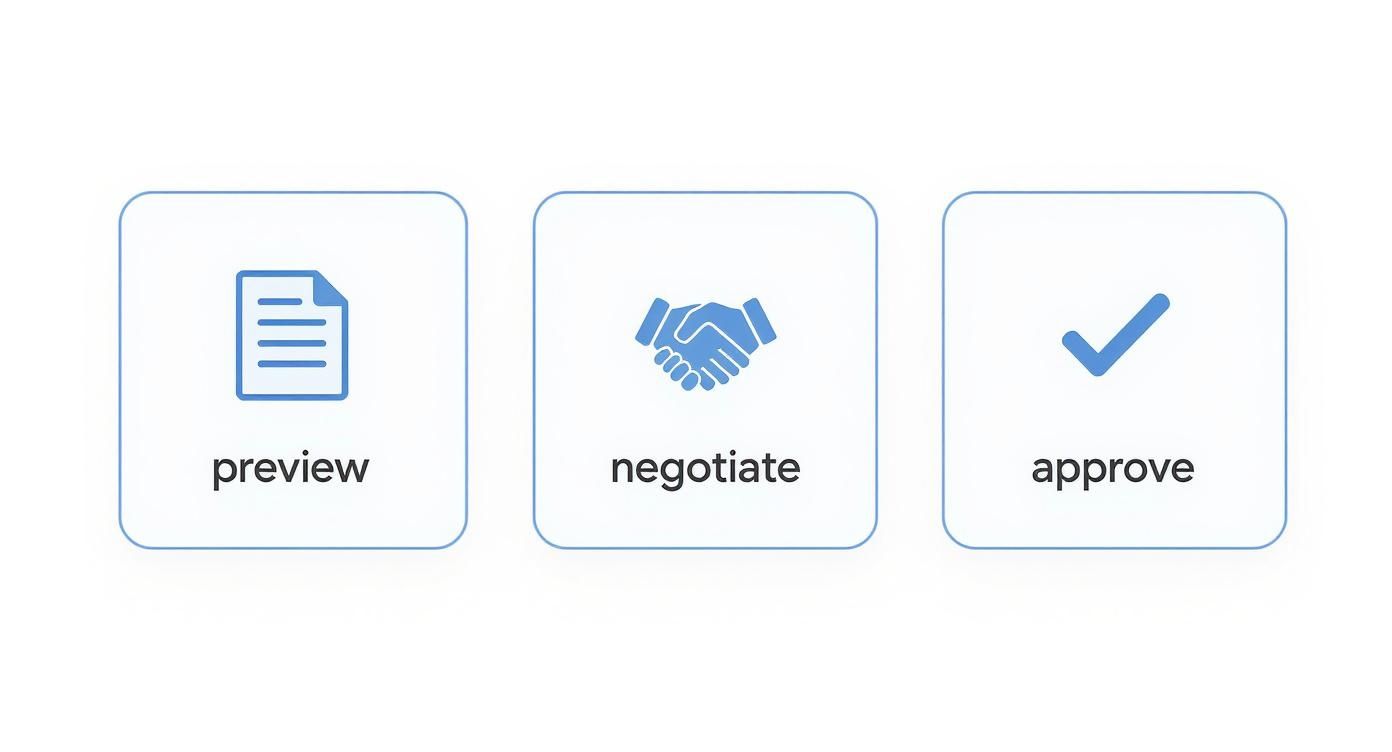
As you can see, the pro forma acts as a preview, a platform for negotiation, and a stepping stone to getting the final green light.
Here’s the critical takeaway: A pro forma invoice is built to be flexible. It’s meant to be changed during negotiations. A commercial invoice is set in stone. It reflects the final, agreed-upon terms and shouldn’t be touched unless there’s a genuine error.
To make this crystal clear, here’s a side-by-side comparison.
Pro Forma Invoice vs Commercial Invoice at a Glance
| Feature | Pro Forma Invoice | Commercial Invoice |
|---|---|---|
| Purpose | To declare the value of goods before shipment and agree on terms. | To request payment for goods after a sale is confirmed. |
| When is it issued? | Before the sale is finalised and goods are shipped. | After the sale is finalised and goods are shipped. |
| Legal Status | Not legally binding. It’s a quote or a good-faith estimate. | A legally binding document that confirms a sale. |
| Accounting | Not recorded in accounts receivable. | Recorded in accounts receivable as a confirmed sale. |
| Flexibility | Can be changed and negotiated. | Final and unchangeable (unless correcting an error). |
| Customs Use | Used for pre-clearance, import licences, or securing financing. | Used by customs to calculate duties, taxes, and tariffs. |
Knowing the difference isn’t just about sounding smart; it’s about making sure you get paid on time and avoid compliance headaches. Using a solid pro forma invoice example as a template is the best way to get your team on the same page and standardise the process.
3. When Do You Actually Need a Pro Forma Invoice in Nigeria?
Knowing the right moment to use a pro forma invoice is what separates smooth deals from logistical nightmares, especially when doing business in Nigeria. This isn’t just another piece of paper or a simple quote. Think of it as your transaction’s passport—it opens doors and gets things moving.
Take importing, for example. If you’re trying to bring goods into Nigeria, a pro forma invoice is one of the very first things your bank will demand. You can forget about securing a Letter of Credit or getting the foreign exchange (Forex) you need through the Central Bank of Nigeria’s official channels without one. Why? The bank needs that formal cost estimate to see the transaction is legitimate before they’ll even think about releasing funds (Deloitte, 2020).
Locking in Deals and Clearing Hurdles
Even within Nigeria, a pro forma invoice gives you a professional edge that can be the final nudge to close a deal. A potential client wants a detailed breakdown of costs before they commit? The pro forma delivers a clear, itemised agreement without being the final, binding bill. It makes your offer concrete and shows you mean business.
It’s also a must-have for getting past administrative roadblocks. Whether you’re applying for specific import permits or need to declare the value of goods for customs pre-clearance, this document is your official statement of intent. It gives bodies like the Nigeria Customs Service a heads-up on your shipment’s value, which helps them calculate duties upfront and stops your goods from getting stuck at the port.
Using a pro forma invoice isn’t just about good paperwork; it’s a strategic play. It formalises your talks, helps you secure financing, and cuts through regulatory red tape, saving you major financial headaches later on.
The numbers back this up. Around 45% of Nigerian SMEs that export rely on pro forma invoices to meet international trade standards. Businesses that use them early in negotiations see a 23% drop in shipment disputes and get paid 15% faster. It’s a simple document with a powerful impact on efficiency. You can get a deeper dive into its role in export sales over at ABC-Amega.
4. Let’s Break Down a Pro Forma Invoice
Theory is great, but seeing a pro forma invoice in the wild is what really makes it click. Let’s pull one apart, piece by piece, to see what makes it tick and why each part is so important.
Here’s what a standard pro forma invoice looks like in action.
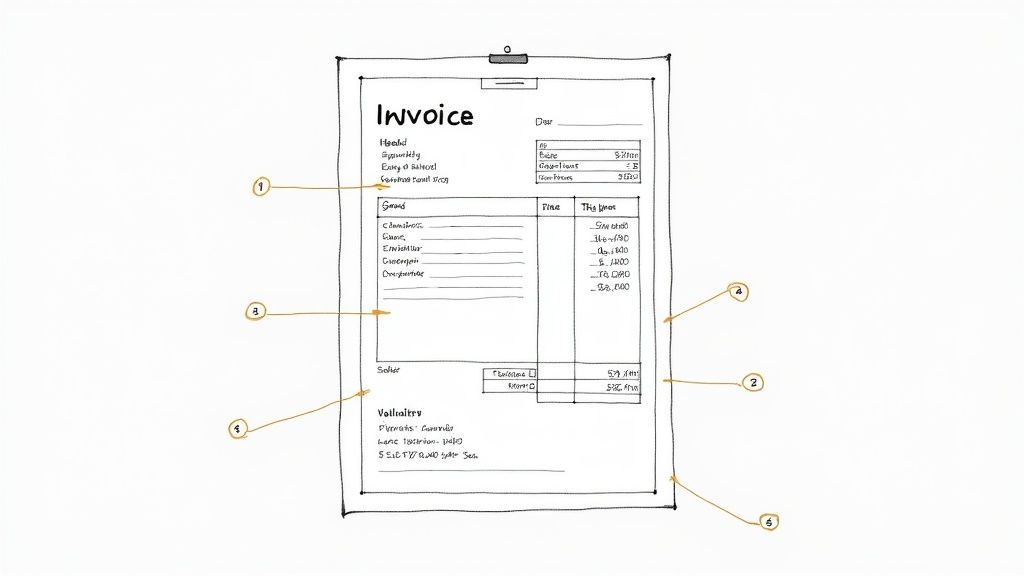
When laid out properly, a pro forma gives both you and your customer a crystal-clear snapshot of the deal on the table. There’s no ambiguity, just a straightforward agreement where every section plays a role in getting everyone on the same page.
The Must-Have Parts of Any Pro Forma Invoice
A pro forma isn’t just a casual quote; certain elements are non-negotiable. Forgetting one of these, especially when dealing with international shipping, can lead to your goods getting stuck in customs for weeks. Banks and border officials need absolute clarity.
Make sure every pro forma you send includes these critical fields:
- A Clear Title: This sounds obvious, but you have to label the document “Pro Forma Invoice” right at the top. This simple act separates it from a final, legally binding commercial invoice and stops any confusion before it starts.
- Seller and Buyer Details: Don’t skimp here. You need the full legal names, addresses, and contact info for both your business and your client. This is basic identification.
- Date of Issue and Expiry Date: Of course, you need the date you created it. But the secret weapon here is an expiry date. Why? Because the cost of your materials or shipping can change. An expiry date protects you by ensuring the prices you’ve quoted are only good for a set period.
- A Detailed List of Goods/Services: Be painfully specific. List every single item or service with a clear description, quantity, price per unit, and the total for that line. Vague descriptions like “consulting services” are a red flag for customs agents (World Customs Organization).
- Terms of Sale and Payment: This is where you spell out the rules of the game. Include how you expect to be paid (e.g., bank transfer), the delivery terms (like Incoterms FOB or CIF), and the final amount due.
Think of a pro forma invoice less like a bill and more like a script for the entire transaction. It’s a comprehensive agreement that details every step, ensuring both you and your client know exactly what’s expected before the deal is done.
Getting this document right from the very beginning isn’t just about process; it’s about building trust and looking professional. Using a platform like CRM Africa helps you generate pro forma invoices that tick all these boxes, keeping you compliant and helping you seal deals without the back-and-forth.
5. Getting Through Nigerian Customs with a Pro Forma Invoice
If you’re importing goods into Nigeria, you know the customs process can feel like a tangled mess. But there’s one document that can cut through the confusion like nothing else: a properly prepared pro forma invoice. It’s your best ticket to a smooth, predictable clearance, saving you from those nasty surprises and costly delays at the port.
Think of this document as an advance notice to the Nigeria Customs Service (NCS). It gives them a heads-up, letting officials do a preliminary valuation of your goods before they even hit the docks. This is a game-changer for efficient trade.
By laying out a clear breakdown of the items and their estimated value, you and your clearing agent can figure out the likely import duties and taxes ahead of time. This kind of foresight kills the budget-wrecking surprises that mess up your supply chain. You’re essentially giving customs a transparent preview of what’s coming.
How It Smooths Out Trade and Dodges Delays
A detailed pro forma invoice gives customs officials the clarity they need to move things along. In Nigeria, these documents are absolutely essential. The NCS relies on them for that first look—the preliminary valuation and classification of goods—which dramatically slashes clearance times.
This isn’t just about bureaucracy. It’s a key part of Nigeria’s larger effort to climb the Ease of Doing Business rankings (World Bank, 2020). When your paperwork is in order, starting with a solid pro forma invoice example, you’re contributing to a more organised and efficient port for everyone. You can get more details on how the Nigeria Customs Service manages trade by checking out their official website.
A solid pro forma invoice isn’t just a list of costs. It’s a signal to customs authorities that you’re professional and compliant, paving the way for a faster, headache-free clearance.
At the end of the day, getting this document right isn’t just about ticking a box. It’s a smart, strategic move. It minimises friction at the border and ensures your goods get from the port to your warehouse without being stuck in limbo or hit with unexpected fees.
6. Got Questions? We’ve Got Answers.
Even when you think you’ve got it all figured out, a few practical questions always pop up. It happens to everyone. Let’s tackle the most common ones so you can handle these situations like a pro.
Is a Pro Forma Invoice a Legally Binding Contract?
Absolutely not. A pro forma invoice is not a legally binding contract in Nigeria or anywhere else, for that matter.
Think of it as a professional quote or a handshake agreement on paper. It’s designed to get you and your client on the same page before any money changes hands or legal commitments are made. It outlines the potential deal so everyone knows what to expect.
The document that legally requires payment is the final commercial invoice. That’s the one you issue after the sale is confirmed, and it’s the one that goes into your official accounting records. Getting this distinction right is critical for clean bookkeeping and staying on the right side of the law, a point often emphasised by experts at platforms like Salesforce.
A pro forma is all about alignment, not obligation. Its job is to finalise the details and build trust before the real transaction kicks off. It’s the negotiation phase, captured in a document.
This is exactly what makes it so useful. It gives both you and your client a formal basis for discussion without locking anyone into a deal too early—a lifesaver for complex sales or international trade.
What Should I Do If Prices Change After I’ve Sent a Pro Forma?
It happens. Since a pro forma is just an estimate, prices can shift. Maybe your shipping costs suddenly went up, the exchange rate took a nosedive, or the price of raw materials changed overnight. It’s part of doing business.
When this happens, here’s what you do:
- Talk to Your Client. Immediately. Don’t wait. Be upfront and explain why the price has changed. Honesty builds trust, even when the news isn’t great.
- Send a New Pro Forma. Don’t just email them the new price. Issue a revised pro forma invoice that clearly shows the updated costs. Make sure it has a new validity date.
- Get Their Go-Ahead. Before you lift a finger to fulfil the order, make sure your client has seen, understood, and agreed to the new terms. A quick email confirmation is usually enough.
Following these steps keeps things professional and ensures everyone is aligned before the final invoice is sent. Your final commercial invoice must always match the price your client actually agreed to—it’s the best way to avoid payment headaches and keep your client relationships strong.
How Do I Turn a Pro Forma Invoice into a Real Invoice?
Easy. Once your client says, “Yes, let’s do this,” converting your pro forma into a final commercial invoice is a straightforward but vital step. This is when the deal becomes official and you formally request payment.
Here are the key changes you’ll make:
- Change the Title: This one’s obvious. Just change the header from “Pro Forma Invoice” to “Invoice”.
- Add an Invoice Number: Every official invoice needs a unique, sequential number from your accounting system. Pro forma invoices don’t have these, but commercial invoices absolutely must.
- Double-Check Everything: Go over every single detail—prices, quantities, shipping dates, payment terms. Make sure they are 100% accurate and reflect what you both finally agreed on.
With those simple tweaks, your good-faith estimate is now a legally recognised request for payment that you can log in your accounts receivable. For a deeper dive on what makes an invoice official, resources like Shipping Solutions have some excellent guides.
Ready to create pro forma invoices that look professional, help you close deals, and get you paid faster? CRM Africa is an all-in-one platform built for Nigerian businesses, combining invoicing, project management, and payments. Generate and send invoices in minutes, and give your clients a branded portal to track progress and pay you. Start for free and see how simple business management can be.